2026.05.22
 Industry Information
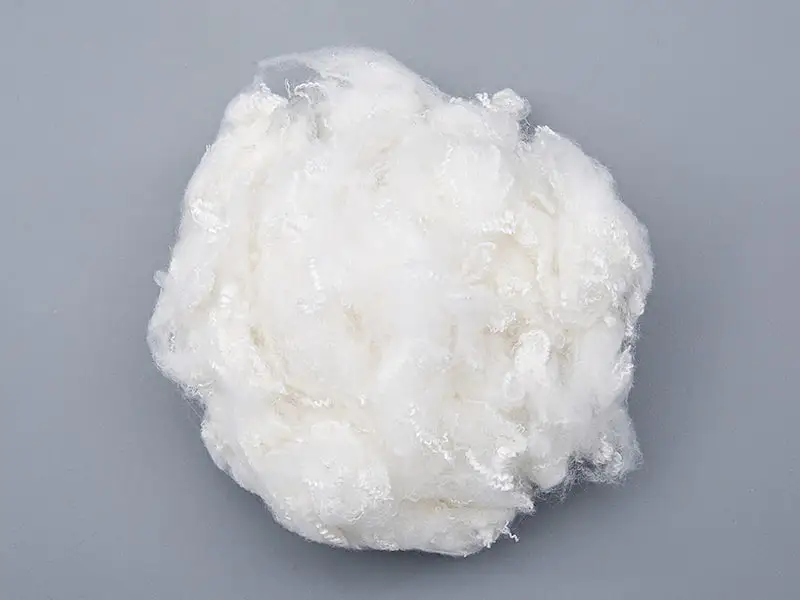
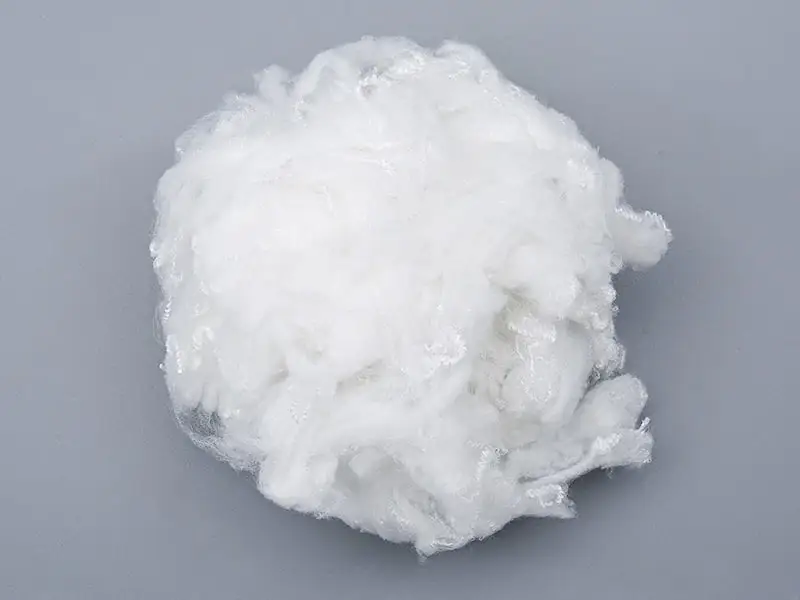
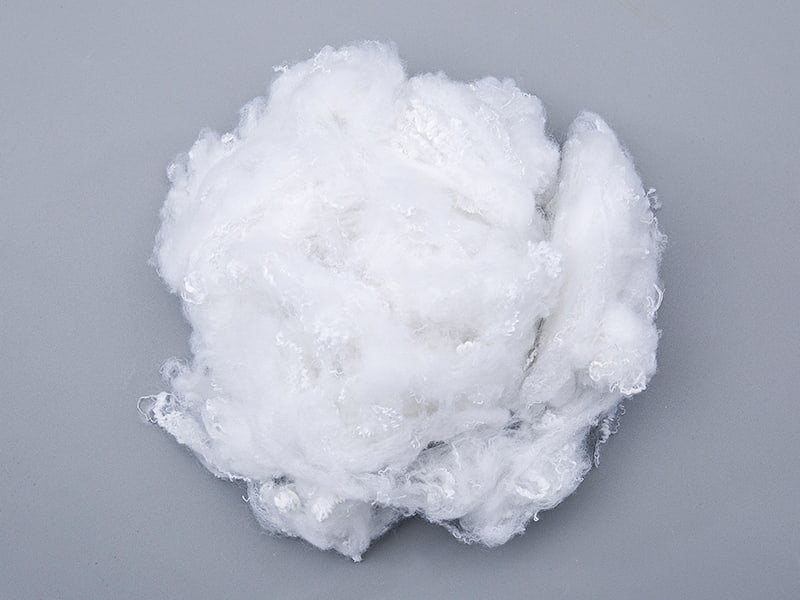
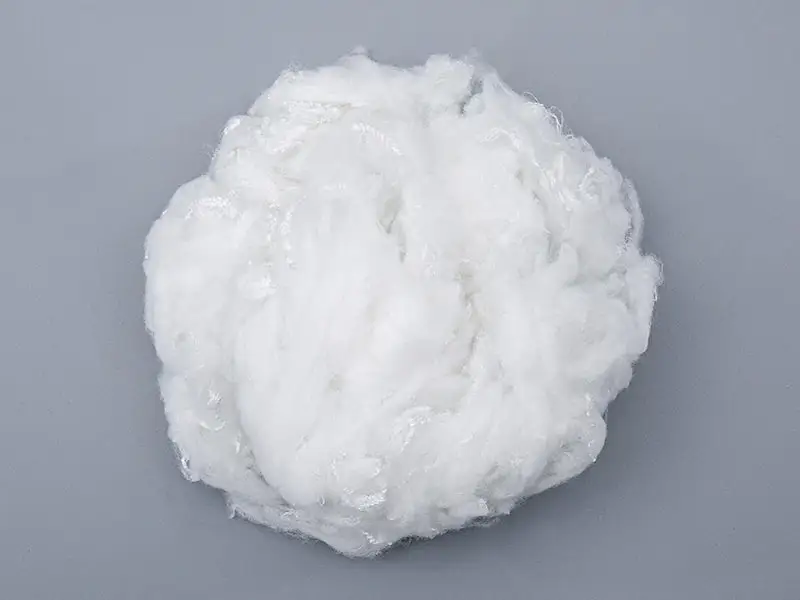
For spinning and filling applications, high quality recycle polyester fiber now achieves tensile strength of 4.5–6.0 g/den and elongation at break of 25–35%, which are statistically equivalent to virgin polyester fiber. In filling uses (e.g., cushions, bedding, toys), its compression recovery rate exceeds 92% after 10,000 cycles, directly competing with prime materials. This confirms that recycling technology has matured to deliver functional parity without compromising downstream performance.
When selecting recycle polyester fiber for spinning (yarn production), three measurable indicators determine success:
For ring spinning and open-end processes, fiber denier (1.2–1.5 D) and cut length (32–38 mm for cotton systems, 51–64 mm for woolen systems) must match the target yarn count. Using inconsistent cut length increases yarn unevenness (CVm) by 8–12% compared to uniform feed stock.
Filling applications (pillows, plush toys, insulation, furniture cushions) rely on different properties. The table below compares standard vs. high quality recycle polyester fiber for filling:
In field tests, bedding filled with high quality recycle polyester fiber retained 94% of original loft after 2 years of weekly use, whereas low-grade recycled material flattened to 72% within 6 months.
Using recycle polyester fiber successfully requires three adjustments in spinning and nonwoven lines:
A common failure mode: Using post-consumer PET bottle flakes without melt filtration creates black specks (carbonized contaminants) that cause 30–50% rejection in light-colored filling products.
Not all recycle polyester fiber is equal. For spinning and filling, acceptable contamination thresholds are:
Suppliers providing certificate of analysis (COA) with each batch must show intrinsic viscosity variation ≤0.03 dL/g within lot and color L-value ≥78 for light fiber applications.
A practical advantage of high quality recycle polyester fiber is its compatibility with two-stage lifecycles. Example: Fiber used in open-end spinning (count Ne 20/1) can later be downcycled into filling for automotive cushioning, maintaining ≥85% original thermal bonding capacity. This closed-loop pathway reduces raw material cost by 30–40% compared to single-use fiber, as documented in industrial pilot projects using post-industrial recycle polyester fiber.
To enable this synergy, avoid mixing flame-retardant or antimicrobial additives in first-use formulation — they reduce second-life filling safety certifications.
For spinning mills and filling converters, the following two-step check prevents downstream defects:
Implementing this protocol reduces spinning breakage incidents by 60–70% and filling clumping complaints by over 80% according to converter surveys.
High quality recycle polyester fiber for spinning and filling delivers verifiable environmental savings per ton:
For filling applications, the reduced dust generation (≤0.1% by weight) also improves factory air quality and worker safety, eliminating needs for additional ventilation in closed blending rooms.
Emon Technology is willing to sincerely join hands with you, cooperate for win-win results, and create brilliance together!
Tel: +86-512-63679088
Email: [email protected]
[email protected]
[email protected]
[email protected]
[email protected]
Add:South of 318 National Highway, Miaotou Village, Meiyan, Wujiang, Jiangsu
Copyright © Suzhou Emon New Material Technology Co., Ltd. All rights reserved.



 English
 中文简体
中文简体 Español