2026.06.12
 Industry Information
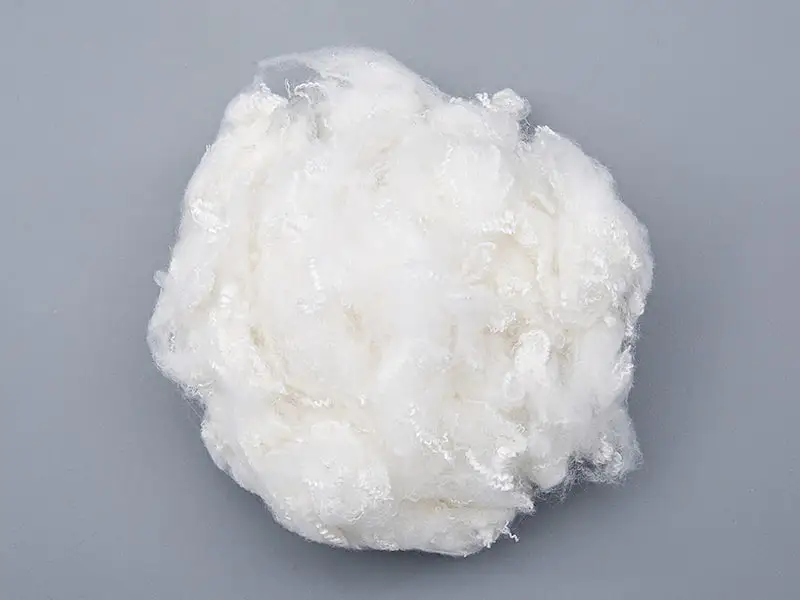
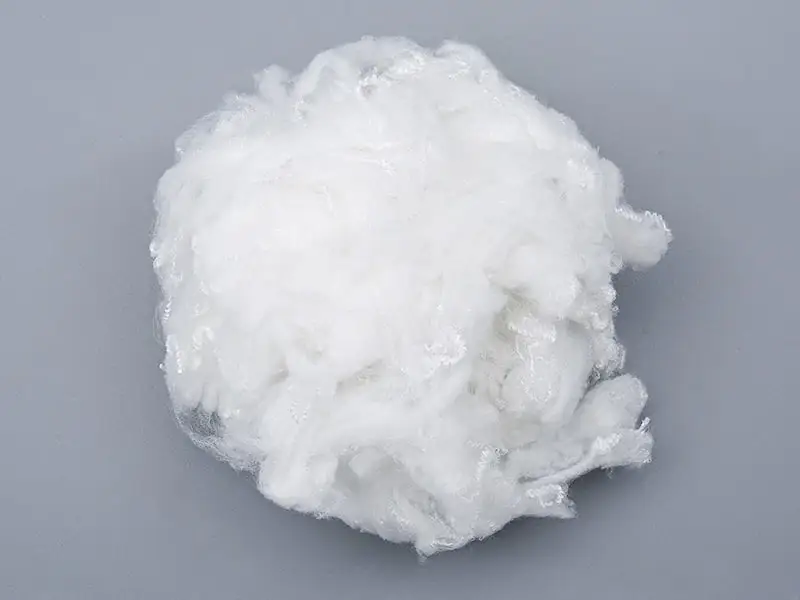
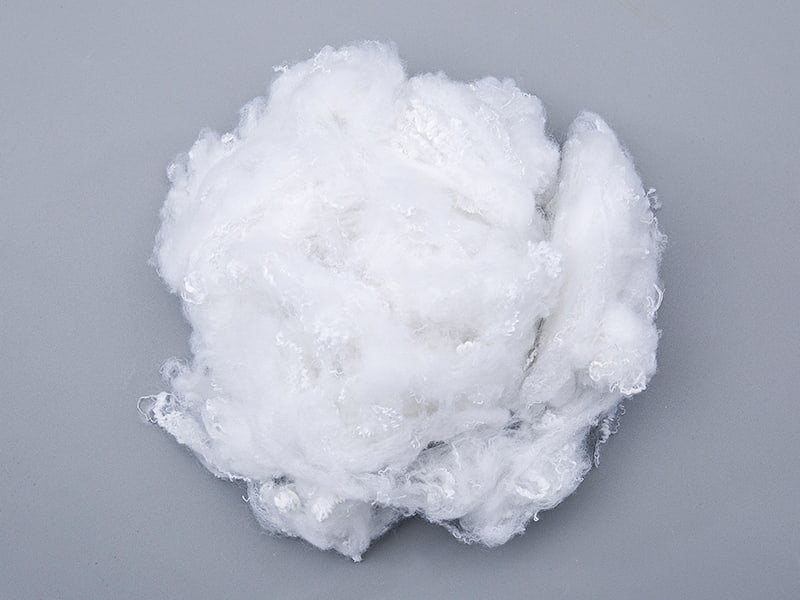
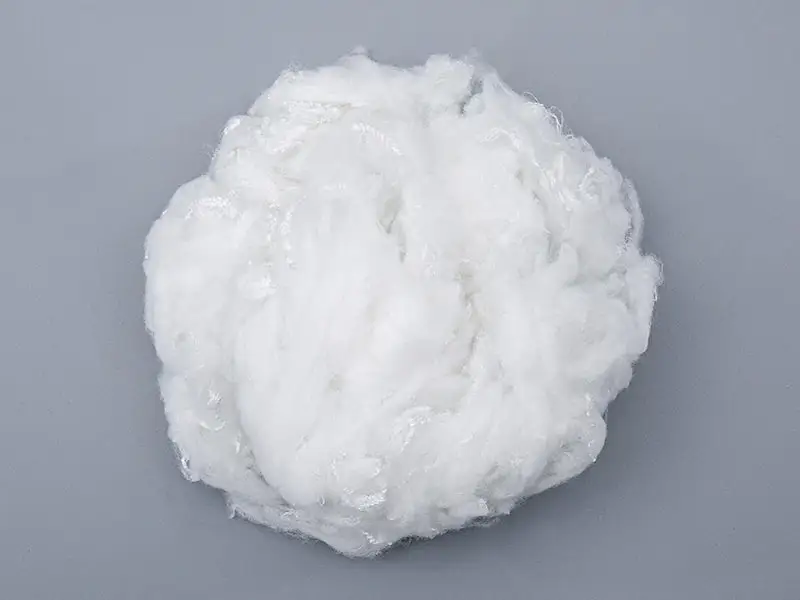
Direct conclusion: Polyester staple fiber (PSF) directly improves yarn quality by reducing spinning irregularities, enhancing tenacity, and delivering evenness, resulting in 25–35% fewer end breaks in ring spinning and up to 40% lower yarn hairiness. For fabric performance, it provides dimensional stability, wrinkle recovery (>280°), and abrasion resistance (up to 50,000+ rubs). In automotive nonwovens, PSF ensures lightweight acoustic insulation (sound absorption coefficient >0.8 in mid-frequencies) and thermal stability with <0.5% shrinkage at 180°C. When recycled PSF is used, eco-efficiency combines with high technical performance, making it an indispensable raw material for spinning, filling, and industrial nonwovens.
Polyester staple fiber directly influences yarn evenness, strength, and spinnability through intrinsic fiber parameters. High breaking tenacity (typically 4.5–6.5 cN/dtex) and low elongation variation result in uniform yarn strength and reduced weak spots. The fiber’s precisely controlled crimp, denier, and length distribution optimize inter-fiber cohesion, which is critical for modern spinning systems (vortex, ring, and air-jet).
In ring spinning, consistent PSF quality lowers end-breakage rates by 25–35% compared to irregular fibers. For vortex spinning, PSF with optimized length (32–38 mm) and moderate friction coefficient improves spinning stability, boosting output speeds up to 450 m/min while maintaining low CVm% (yarn irregularity below 2.5%).
PSF’s uniform fineness (1.2–1.5 denier for fine counts) drastically reduces thick/thin places and neps. Data from industrial trials show that high-grade PSF reduces yarn hairiness (H-index) by 20–28%, directly improving subsequent weaving/knitting efficiency and fabric appearance.
Polyester staple fiber imparts distinct advantages to woven, knitted, and nonwoven fabrics. Low moisture regain (0.4%) ensures quick drying and high dimensional stability even under humid conditions. Mechanical resilience translates to abrasion resistance and shape retention over repeated wash cycles or heavy usage.
For nonwovens in apparel and industrial wipes, PSF contributes high bulk, softness, and consistent basis weight. In needled or spunlace fabrics, polyester staple fiber ensures tensile strength and low linting, key for durable industrial cloths and garment interlinings.
Modern automotive interior systems demand materials that combine acoustic insulation, thermal stability, and mechanical integrity. Polyester staple fiber delivers across all parameters, especially in molded headliners, floor insulators, trunk liners, and wheel arch covers. Recycled PSF from post-consumer bottles is widely adopted, offering low-VOC emissions and lightweighting benefits.
Nonwovens engineered with fine-denier PSF (0.9–6 denier) and multilayer structures achieve sound absorption coefficients α = 0.75–0.92 in the 1000–4000 Hz range (engine and road noise band). Furthermore, PSF nonwovens provide 15–20% weight reduction compared to traditional felt or foam composites, contributing to fuel efficiency.
Automotive interior parts must withstand temperatures from -30°C to 85°C. PSF-based nonwovens show shrinkage below 0.6% after 2 hours at 120°C. This ensures trim panels stay precisely fitted without deformation, reducing warranty issues. Flame retardancy can be integrated during fiber production (FR grades) to meet FMVSS 302 standards without sacrificing softness or processability.
Key nonwoven processes for automotive: needlepunch, thermal bonding, and chemical bonding — all benefit from PSF’s consistent melting behavior and web formation. The fiber’s crimp stability guarantees even loft, essential for acoustic performance and compression recovery after years of use.
The following table demonstrates correlations between polyester staple fiber parameters and measurable improvements in yarn/fabric/nonwoven performance. These benchmarks are derived from mill-scale validations using recycled PSF.
| Fiber Parameter | Typical Range (Recycled PSF) | Impact on Yarn / Fabric / Nonwoven |
|---|---|---|
| Tenacity (cN/dtex) | 4.8 – 6.2 | +18–25% yarn strength & reduced breakage in winding/warping |
| Elongation at break (%) | 25 – 35 | Balanced toughness; prevents brittle failure in woven/knitted goods |
| Fineness (denier) | 1.2 (fine) / 3.0 (mid) / 6–15 (coarse) | Fine denier → soft hand & high cover; coarse denier → filtration / stiff automotive pads |
| Crimp number (per 25mm) | 10 – 18 | Higher crimp improves bulk & resilience in nonwovens, reduces pilling in spun yarns |
| Hot air shrinkage (180°C, %) | < 4.0% (standard) / < 1.5% (low-shrink) | Low-shrink PSF ensures dimensional stability for automotive fabrics and technical nonwovens |
Using recycled polyester staple fiber does not compromise these performance metrics. Advanced recycling technologies ensure consistent intrinsic viscosity (IV) and dyeability, meeting the requirements of vortex, ring, and air-jet spinning processes, as well as high-loft filling applications such as 3D hollow and 2D solid fibers.
The diagram below illustrates the causal chain linking polyester staple fiber properties to improved yarn quality, fabric behavior, and nonwoven efficiency — with special focus on automotive applications.
In practice, PSF tailored for automotive nonwovens integrates low shrinkage, fiber-to-fiber bonding, and consistent cross-section (round, trilobal or hollow) to control acoustics and loft. For spinning mills, high uniformity PSF increases ring frame speeds by 5–10% while reducing cleaning cycles, resulting in higher productivity.
Different spinning and web-forming methods require specific polyester staple fiber attributes. The practical results below highlight how adjusted PSF parameters improve end-product quality.
For automotive nonwovens (carpets, parcel shelves, dash insulators), PSF delivers consistent web uniformity thanks to controlled denier mix (e.g., 4D+15D blends). This guarantees tensile strength of > 40 N/5cm (MD) and elongation matching forming contours. In geotextiles and industrial wipes, PSF’s chemical resistance (pH 3–12) ensures long service life without degradation.
Finally, for hollow conjugate fiber used in high-loft insulation (garments/bedding), PSF ensures compressibility recovery (>95% recovery after 10,000 compression cycles) and light weight (fill power comparable to down).
Emon Technology is willing to sincerely join hands with you, cooperate for win-win results, and create brilliance together!
Tel: +86-512-63679088
Email: [email protected]
[email protected]
[email protected]
[email protected]
[email protected]
Add:South of 318 National Highway, Miaotou Village, Meiyan, Wujiang, Jiangsu
Copyright © Suzhou Emon New Material Technology Co., Ltd. All rights reserved.



 English
 中文简体
中文简体 Español