2025.12.05
 Industry Information
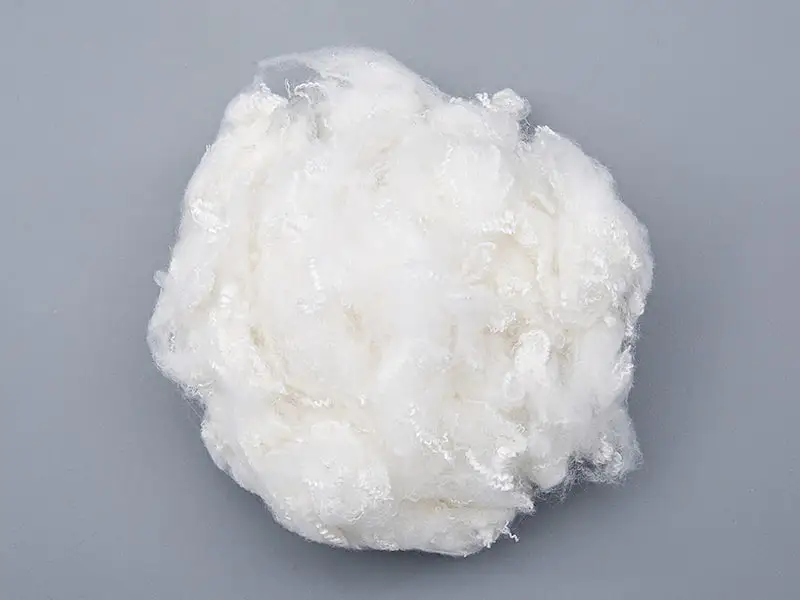
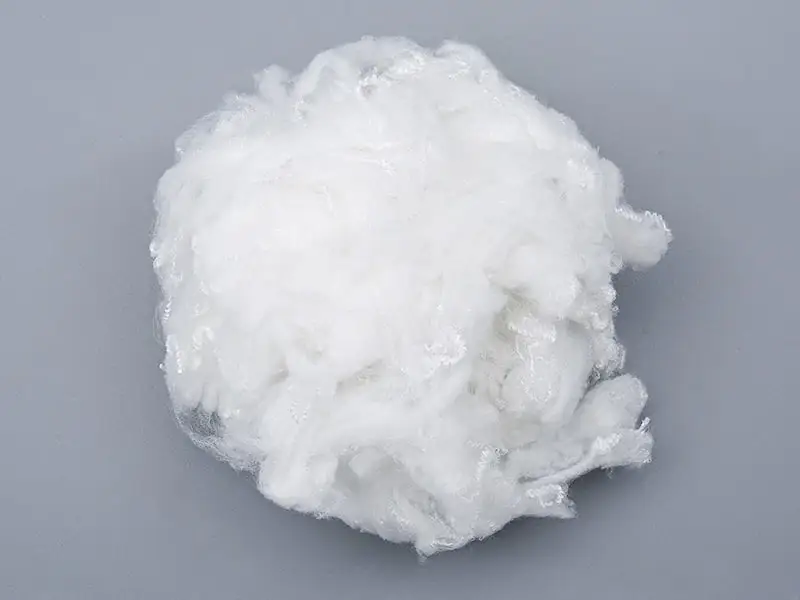
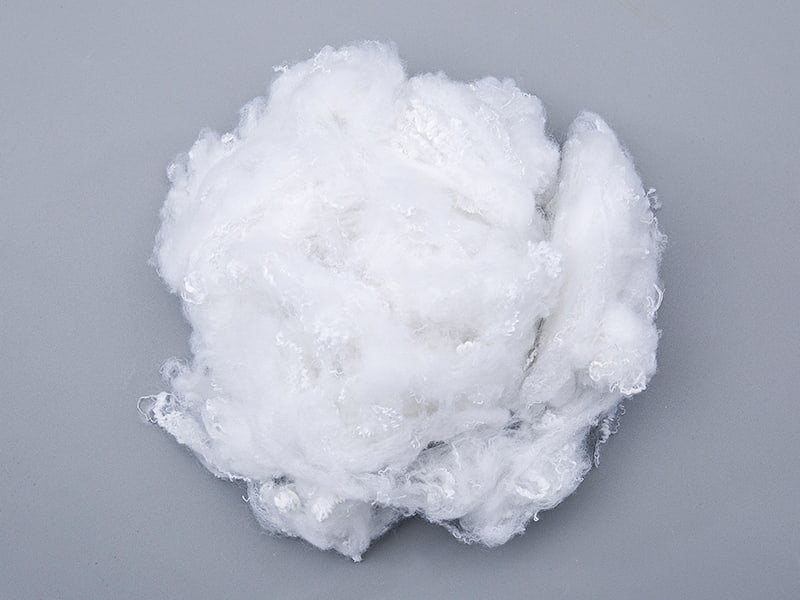
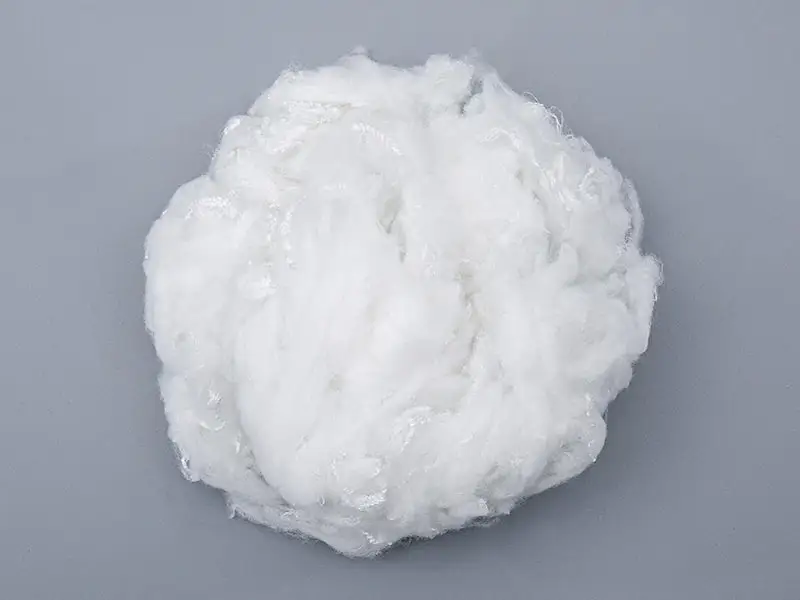
Polyester staple fiber is one of the widely used synthetic fibers in the global textile and nonwoven industry. Known for its strength, durability, weather resistance, and versatile processability, it plays a critical role in apparel manufacturing, home textiles, industrial fabrics, hygiene materials, automotive fabrics, and engineered composites.
Polyester staple fiber is a short fiber form of PET (polyethylene terephthalate). Its fiber length typically ranges from 25 mm to 120 mm, depending on end-use requirements. It can be carded, combed, spun into yarn, air-laid, or formed into nonwoven fabrics. Its stable molecular structure and compatibility with other fibers make it suitable for pure spinning as well as blending with cotton, viscose, wool, acrylic, or other regenerated and natural fibers.
Polyester staple fiber is valued because it offers:
Consistent mechanical strength
High abrasion resistance
Excellent wrinkle resistance
Chemical resistance in harsh environments
Thermal stability and dimensional control
Compatibility with recycled material systems
Its adaptability in both textile and technical applications has led to continuous global demand, making it one of the backbone materials in modern fiber engineering.
The fundamental raw material for polyester staple fiber is PET. This can originate either from virgin PET chips or recycled PET flakes, depending on the required performance and sustainability goals.
Virgin PET is produced through petrochemical polymerization. It offers high purity and consistent performance, making it ideal for applications requiring:
Stable tensile properties
Bright and uniform color tone
High spinning precision
Enhanced durability and reliability
Typical uses include high-grade spinning fibers, apparel yarns, and certain industrial fibers that rely on precise specifications.
Recycled PET is sourced from post-consumer bottles or industrial PET waste. After washing, sorting, and reprocessing, the material becomes suitable for fiber spinning. Recycled polyester staple fiber is favored for its:
It is commonly used in filling materials, nonwoven fabrics, automotive applications, and home furnishing products.
| Raw Material Type | Source | Characteristics | Common Applications |
|---|---|---|---|
| Virgin PET Chips | Petrochemical synthesis | High purity, strong mechanical properties | Spinning, high-performance textiles |
| Recycled PET Flakes | Recovered bottle flakes or PET waste | Eco-friendly, cost-effective | Filling materials, nonwovens, construction |
| Modified PET | PET with additives or functional masterbatches | Functional properties such as flame retardancy or antibacterial behavior | Specialty textiles and industrial uses |
The production of polyester staple fiber includes spinning, drawing, crimping, heat setting, and cutting. Each step affects fiber quality and end-use performance.
PET melt is extruded through a spinneret to form filaments. The geometry of the spinneret determines fiber cross-sections:
Different shapes influence luster, bulkiness, and tactile properties.
Drawing improves molecular orientation and increases fiber strength. The level of drawing varies depending on the intended application, such as fine spinning, nonwoven fabrics, or high-strength industrial fiber.
Crimping introduces elasticity and bulk. It enhances fiber cohesion, improves spinning performance, and increases loft for filling applications. Crimping may be mechanical or air-assisted, depending on production design.
Heat setting stabilizes the crimp and ensures fiber resilience and uniformity. It prevents excessive deformation during downstream fiber processing.
The fiber tow is cut into the required staple length—standard options include 32 mm, 38 mm, 51 mm, and longer lengths for nonwoven processes.
Polyester staple fiber offers a balanced combination of structural and functional properties.
These characteristics enable strong, durable yarns and fabrics.
PSF remains stable under high humidity and temperature fluctuations, ensuring consistent product quality in apparel, home textile, and industrial uses.
These properties are critical in nonwoven products and industrial composites.
Polyester staple fiber can be modified to exhibit additional features:
Polyester staple fiber classification depends on denier, fiber structure, raw material, and functional requirements.
| Type | Denier Range | Structure | Typical Application |
|---|---|---|---|
| Spinning Grade | 1.2D–3D | Solid | Blended yarns, woven and knitted fabrics |
| Hollow Filling Grade | 3D–15D | Hollow or siliconized hollow | Pillows, quilts, furniture padding |
| Industrial Grade | 15D–40D | Solid or functional | Geotextiles, filters, automotive fabrics |
| Recycled PSF | Various | Solid/Hollow | Nonwovens, apparel fillings, composites |
Polyester staple fiber has broad utility across multiple industries due to its durability, versatility, and consistent performance.
PSF is widely used in:
Its wrinkle resistance, wash durability, and ease of processing make it a core material in global apparel manufacturing.
PSF is ideally suited for soft, high-bulk material such as:
In the nonwoven sector, polyester staple fiber contributes to:
Its thermal bonding capability supports multiple nonwoven technologies.
Polyester staple fiber is used in:
High strength, chemical resistance, and stability make PSF a dependable industrial material.
Choosing a dependable polyester staple fiber supplier is a key step for manufacturers, importers, and distributors. Quality consistency, technical support, and delivery performance directly influence production outcomes.
| Key Parameter | Description | Evaluation Focus |
|---|---|---|
| Denier (D) | Options from ~1.2D to >40D | Must match product requirements |
| Fiber Length (mm) | Typically 25–120 mm | Compatibility with spinning or nonwoven equipment |
| Crimp Level | Affects loft and spinnability | Consistency and resilience |
| Strength | Varies by grade and material | Must meet mechanical requirements |
| Whiteness/Luster | Color stability | Batch uniformity |
| Functional Properties | Hydrophilic, flame-retardant, antibacterial, etc. | Application-specific needs |
Polyester staple fiber is used in apparel textiles, nonwoven fabrics, home textile fillings, filtration media, automotive interiors, and industrial reinforcement materials.
Virgin PSF offers higher purity and refined mechanical performance. Recycled PSF is more sustainable and cost-effective, suitable for filling, nonwoven fabrics, and general industrial uses.
The selection depends on your process. Fine deniers (1.2D–3D) are recommended for spinning, while coarser deniers (7D–15D) are suited for filling. Fiber length must match equipment requirements.
Its strength, chemical resistance, heat-bonding capability, and versatility make it ideal for hygiene materials, filtration fabrics, and industrial nonwovens.
Emon Technology is willing to sincerely join hands with you, cooperate for win-win results, and create brilliance together!
Tel: +86-512-63679088
Email: [email protected]
[email protected]
[email protected]
[email protected]
[email protected]
Add:South of 318 National Highway, Miaotou Village, Meiyan, Wujiang, Jiangsu
Copyright © Suzhou Emon New Material Technology Co., Ltd. All rights reserved.



 English
 中文简体
中文简体 Español