2026.07.17
 Industry Information
The global textile industry faces mounting pressure to reduce environmental impact and adopt sustainable practices. Recycle polyester fiber represents one of the most effective solutions available today, transforming post-consumer waste into high-quality materials suitable for clothing manufacturing. This shift toward sustainability is not merely a trend but a fundamental transformation in how the industry sources and produces fibers.
Modern consumers increasingly demand transparency about product origins and environmental responsibility. Recycled polyester addresses these concerns by converting discarded materials into viable textile components, reducing landfill waste while maintaining performance standards comparable to virgin alternatives.
The production process for recycled polyester involves several distinct stages, each critical to ensuring final product quality and environmental benefits.
The journey begins with collection of post-consumer plastic waste and discarded textile materials. Sorting facilities separate polyester-based products from other materials, ensuring only suitable items enter the production pipeline. Advanced sorting technologies now enable more precise separation, improving feedstock quality.
Collected materials undergo thorough cleaning to remove contaminants, labels, and adhesives. This stage is essential because impurities directly affect fiber quality and processing efficiency. The cleaned materials are then shredded into small flakes, creating a uniform feedstock for subsequent processing.
The shredded polyester undergoes melting and re-polymerization processes. Advanced facilities employ different technologies: mechanical recycling, where materials are melted and re-spun directly, and chemical recycling, which breaks polyester into molecular components for re-polymerization. These methods produce polyester staple fiber suitable for blending with other materials or use as standalone products.
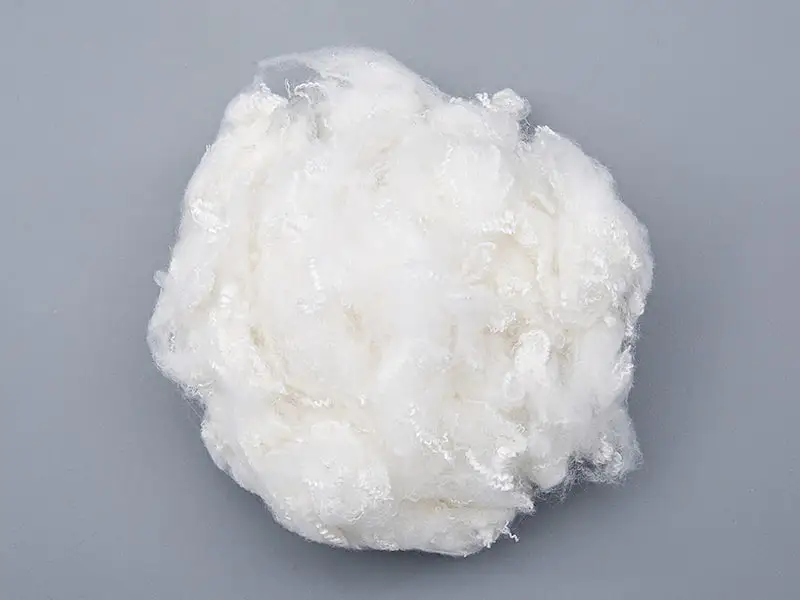
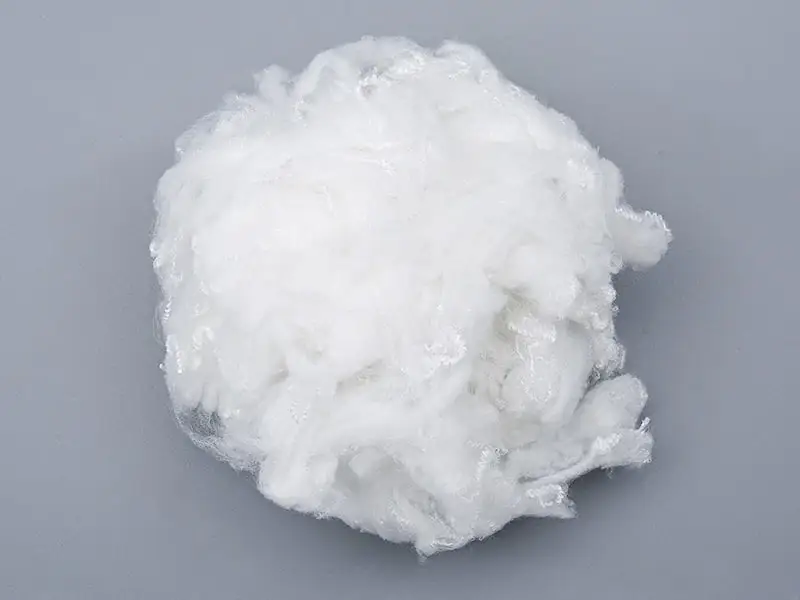
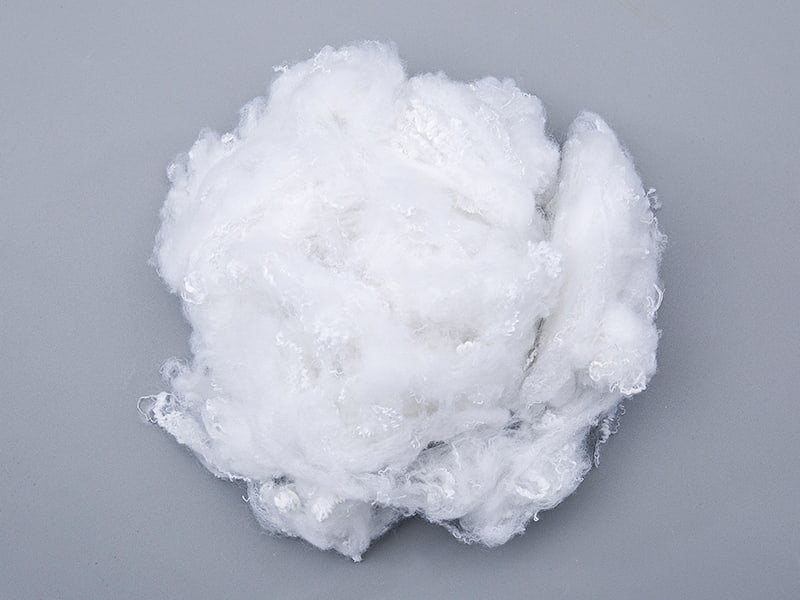
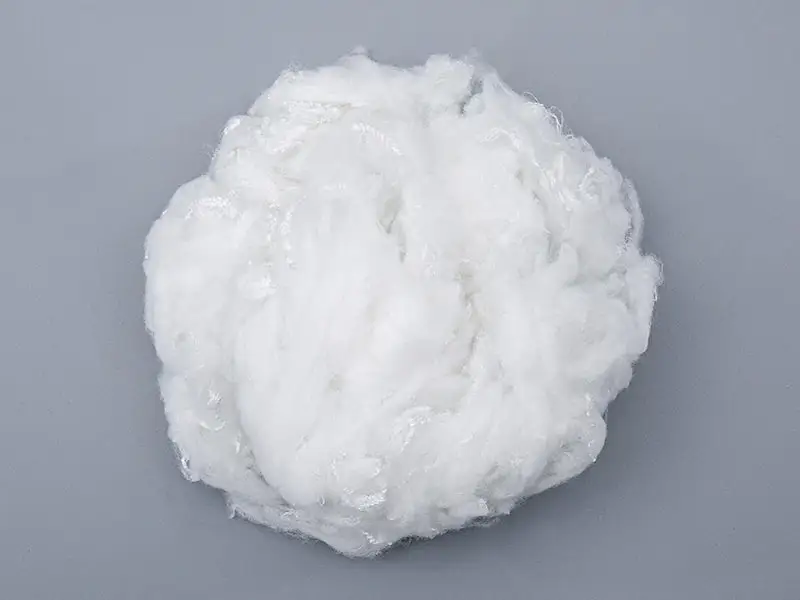
Following polymerization, the molten polyester is extruded through spinnerets into individual filaments. These filaments are then drawn and processed to achieve desired properties such as crimp, tenacity, and fineness. The resulting recycled polyester staple fiber meets established industry standards for use in various applications.
Production of recycled polyester requires significantly less water and energy compared to virgin polyester manufacturing. Studies indicate that recycled production processes consume approximately 30-40 percent less energy and require substantially reduced water volumes. This efficiency translates to measurable reductions in operational environmental impact.
Each kilogram of recycled polyester produced diverts equivalent weight from landfill systems. Given that synthetic textiles represent a substantial portion of municipal waste streams, widespread adoption of recycled materials creates meaningful environmental benefits at scale. This circular approach transforms waste management challenges into resource opportunities.
The carbon emissions associated with recycled polyester production are substantially lower than virgin alternatives. Manufacturing processes that utilize recycled inputs generate fewer greenhouse gases throughout the supply chain, contributing to climate change mitigation objectives.
Key Insight: Organizations adopting recycled polyester in their product lines typically achieve 20-35 percent reductions in product-level carbon emissions compared to all-virgin alternatives, with potential for greater improvements through optimized supply chain practices.
As recycled fiber production scales, manufacturing costs continue declining. Modern facilities achieve cost competitiveness with virgin polyester in many market segments, particularly when environmental externalities are considered. This economic transition enables sustainability adoption without requiring premium pricing.
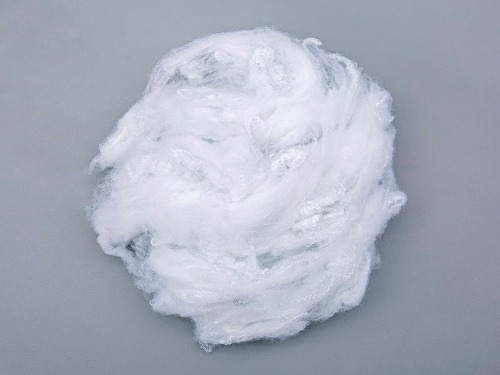
Recycled polyester fibers demonstrate performance metrics comparable to virgin alternatives across critical parameters. Tensile strength, elongation at break, and resilience meet or exceed established industry specifications when production processes maintain rigorous quality controls.
| Property | Recycled Polyester Fiber | Virgin Polyester Fiber |
|---|---|---|
| Tensile Strength (cN/tex) | 5.0-6.5 | 5.2-6.8 |
| Elongation at Break (%) | 25-35 | 26-36 |
| Moisture Regain (%) | 0.4-0.7 | 0.4-0.7 |
| Melting Point (°C) | 250-260 | 250-260 |
Manufacturers offer diverse product variants to meet specific application requirements. These variations include different fiber fineness, crimp configurations, and cross-sectional profiles.
Modern production facilities implement comprehensive testing regimens ensuring consistent quality. Advanced analytical equipment measures fiber diameter uniformity, strength distribution, and contaminant levels. These quality protocols protect brand reputation and ensure garment durability.
Manufacturers incorporate recycled polyester through various blending approaches, each offering distinct advantages. Common blending ratios range from 30-100 percent recycled content depending on performance requirements and sustainability objectives.
Different garment types benefit from recycled polyester incorporation through distinct pathways.
The recycled polyester fiber market experiences robust expansion driven by regulatory pressures, consumer demand, and corporate sustainability commitments. Manufacturers worldwide have increased production capacity substantially over recent years, responding to growing demand from apparel manufacturers seeking sustainable sourcing options.
Modern manufacturing practices increasingly emphasize traceability throughout the supply chain. Advanced tracking systems enable verification of recycled content claims, supporting consumer confidence and preventing greenwashing. Third-party certifications validate environmental claims and manufacturing practices.
Recycled polyester production occurs across multiple geographic regions, with significant capacity in Asia, Europe, and emerging markets. Regional production development reduces transportation distances and improves supply chain efficiency. Local production capabilities enable apparel manufacturers to access recycled fibers with shorter lead times and reduced logistics complexity.
Multiple certification frameworks validate recycled polyester fiber quality and environmental claims. These standards ensure consistency and provide independent verification of sustainability benefits.
Third-party certifications provide independent verification that recycled polyester products meet environmental and quality standards, enabling manufacturers to communicate sustainability achievements with credibility. Certifications also facilitate market access by meeting retailer requirements and addressing consumer verification concerns.
Emerging technologies continue improving recycled polyester production efficiency and fiber quality. Chemical recycling methods break polymers into constituent molecules, enabling production of virgin-equivalent materials from complex waste streams. These innovations expand the range of processable feedstocks and improve overall sustainability metrics.
Mechanical recycling processes benefit from improved sorting technologies, better contaminant removal methods, and refined fiber spinning techniques. These advances reduce quality degradation observed in early mechanical recycling implementations, enabling higher-performance recycled fibers suitable for demanding applications.
Progressive manufacturers combine mechanical and chemical recycling technologies, optimizing benefits from each approach. This flexibility enables processing of diverse waste streams while maintaining consistent output quality. Hybrid strategies improve economic viability while expanding material availability.
Recycled materials originate from diverse sources with varying composition and condition. Maintaining consistent quality requires sophisticated processing controls and careful feedstock management. Advanced analytical techniques now enable real-time quality monitoring, addressing consistency concerns that previously limited recycled adoption.
Post-consumer waste inevitably contains contaminants including dyes, finishes, and non-textile materials. Comprehensive cleaning processes remove most contaminants, though trace residues may remain. Ongoing research focuses on contamination tolerance and removal efficiency improvements.
Though recycled polyester costs approach parity with virgin alternatives, production expense remains sensitive to collection efficiency and processing technology. Scale improvements continue reducing relative production costs, with expectation that recycled options will achieve substantial cost advantages as capacity expands.
Despite environmental benefits, some consumers harbor misconceptions about recycled material quality and durability. Educational initiatives explaining performance equivalence and lifecycle benefits help address resistance and build market acceptance. Transparent communication about testing standards and certification frameworks supports confidence building.
Textile manufacturing represents one of the largest water-consuming industrial sectors globally. Recycled polyester production requires significantly less water than conventional virgin fiber manufacturing. This conservation is particularly meaningful in regions experiencing water stress, where textile production creates competing demands with agricultural and domestic uses.
Comprehensive lifecycle analysis demonstrates that recycled polyester production generates substantially lower energy requirements across all manufacturing stages. Reduced energy consumption translates directly to lower carbon emissions and decreased operational environmental impact. These benefits accumulate significantly when multiplied across industry-scale adoption.
Recycled polyester production diverts plastic waste that would otherwise contribute to environmental persistence. Post-consumer plastic persistence in natural environments creates severe ecological consequences including microplastic contamination in marine systems. Recycled conversion prevents this environmental degradation pathway.
Conventional polyester production involves substantial chemical processing including petroleum extraction, chemical synthesis, and application of finishing compounds. Recycled production avoids many upstream chemical processes, reducing toxic chemical releases and associated environmental contamination risks.
Establishing reliable sourcing relationships with recycled polyester fiber suppliers requires careful evaluation of production capabilities, quality consistency, and certification status. Direct engagement with manufacturers enables customization of fiber specifications for particular application requirements and ensures supply chain transparency.
Apparel manufacturers should conduct independent testing verifying that sourced recycled polyester meets specific performance requirements for intended applications. Standard laboratory tests assess tensile properties, dye uptake, shrinkage characteristics, and other critical parameters ensuring garment performance.
Clear communication of recycled content percentage and third-party certification status builds consumer trust and differentiates products in competitive markets. Educational content explaining environmental benefits and performance equivalence helps consumers understand sustainability value propositions.
Volume commitments typically enable more favorable pricing structures. Manufacturers seeking cost optimization should communicate production schedules and requirements clearly, allowing suppliers to optimize production planning and potentially reduce per-unit costs through improved efficiency.
Recycled polyester is primarily manufactured from post-consumer plastic waste, particularly plastic beverage bottles, and discarded polyester textiles. Advanced sorting facilities separate polyester-containing materials from mixed waste streams, creating feedstock for fiber production. The diversity of source materials represents both opportunity and challenge, requiring sophisticated processing to maintain consistent quality.
Quality recycled polyester demonstrates performance metrics essentially equivalent to virgin alternatives across critical parameters including tensile strength, elongation, and resilience. Production processes yielding sub-standard recycled materials have been largely superseded by advanced manufacturing techniques ensuring performance parity. Third-party testing and certification validate equivalence for most applications.
Recycled polyester pricing has approached parity with virgin alternatives as production capacity increases and technologies improve. Pricing varies by market conditions, volume commitments, and fiber specifications. In many instances, recycled options now compete directly on cost while offering superior environmental profiles, creating compelling economic value propositions.
Third-party certifications including Global Recycled Standard provide independent verification of recycled content claims. Consumers should seek products displaying certification logos and inquire about specific recycled content percentages. Transparent labeling and product documentation supporting sustainability claims indicate responsible manufacturer practices.
Recycled polyester production generates substantially lower environmental impact compared to virgin alternatives. Benefits include reduced water consumption, lower energy requirements, decreased chemical usage, and prevention of waste stream contributions to environmental persistence. Lifecycle assessment studies consistently demonstrate environmental superiority of recycled alternatives.
Yes, recycled polyester maintains recyclability, enabling circular economy approaches. Garments manufactured from recycled polyester can enter recycling streams at end-of-life, creating potential for multiple regeneration cycles. However, some property degradation may occur with each cycle, potentially limiting the number of viable regenerations.
Recycled polyester performs excellently in most applications, though specific limitations include potential sensitivity to certain dyes and chemical processes used in finishing. Quality consistency requirements necessitate careful feedstock management and processing controls. For specialized applications demanding extreme performance, virgin polyester may remain necessary in some instances.
Primary differences involve feedstock sourcing and initial processing stages. Recycled production begins with collected plastic waste requiring cleaning and preparation, whereas virgin production starts with petroleum-derived raw materials. Subsequent polymerization, extrusion, and fiber spinning processes operate on similar principles, though recycled processing may incorporate specialized techniques addressing feedstock-specific challenges.
Emon Technology is willing to sincerely join hands with you, cooperate for win-win results, and create brilliance together!
Tel: +86-512-63679088
Email: [email protected]
[email protected]
[email protected]
[email protected]
[email protected]
Add:South of 318 National Highway, Miaotou Village, Meiyan, Wujiang, Jiangsu
Copyright © Suzhou Emon New Material Technology Co., Ltd. All rights reserved.



 English
 中文简体
中文简体 Español