2026.09.25
 Industry Information
The global textile industry faces a fundamental shift. While recycled fiber currently represents less than 1% of total fiber production sourced from textile waste, regulatory pressures and consumer demand are accelerating adoption at an unprecedented rate. For procurement teams, sourcing managers, and product developers, the question is no longer whether to use recycled fiber, but where to find consistent, high-quality, and cost-effective supplies that meet your specific application needs.
Unlike virgin fiber, mechanically recycled fiber introduces a new set of technical considerations. Fiber length changes. Strength properties shift. Contamination profiles differ significantly. These factors directly impact your production process, final product performance, and total cost of ownership. Making the wrong sourcing decision can lead to production delays, quality rejections, or unexpected price increases mid-contract.
This guide walks through the critical factors you need to evaluate before placing your first order, regardless of whether you're blending recycled fiber into existing formulations or building products entirely around recycled content.
Mechanically recycled fiber originates from either post-consumer textile waste (garments, home textiles) or post-industrial waste (cutting scraps, rejected fabric rolls). The recycling process involves shredding, opening, and loosening these textiles through mechanical action—essentially teasing apart the fiber structure without breaking down its chemical composition.
The result is fiber that retains its basic chemistry but exhibits several characteristic changes:
Chemical recycling takes a different approach. The fiber material is dissolved and broken down to its molecular components, then respun into new filament. This produces fiber closer in quality to virgin material, with longer staple length and higher tenacity. However, the chemical process requires specialized infrastructure and energy input, resulting in prices often 30-50% higher than mechanically recycled alternatives.
Your application determines which recycled fiber grade makes economic and technical sense:
| Application | Recommended Fiber Type | Key Driver |
|---|---|---|
| Nonwoven insulation, automotive interiors | Mechanical | Cost efficiency, lower strength requirements |
| Ring spinning blends (apparel) | Mechanical + virgin blend | Spinability, strength retention |
| Premium knit or woven products | Chemical | Quality, consistency, performance |
| Paper, packaging, engineered products | Mechanical (cellulosic) | Bulk, cost control |
When evaluating recycled fiber suppliers, technical specifications separate reliable partners from commodity sellers. Most procurement teams focus solely on price, missing critical performance variables that impact production efficiency and end-product quality.
Mechanically recycled fiber is inherently shorter than virgin fiber due to the recycling process. However, not all short fiber is created equal. The length distribution—the spread of fiber lengths within a batch—determines whether your yarn or fabric production will run smoothly or face constant breaks and quality variation.
Request a length distribution curve from your supplier showing the percentage of fiber in each length category. For ring-spun yarn production, you typically need a weighted average length of 25-35 mm with minimal ultra-short fiber (below 12 mm). For nonwovens, the requirement is more forgiving, but consistency matters more than absolute length.
A supplier that cannot provide this data is signaling either a lack of quality control or an unwillingness to be transparent.
Tenacity measures how much force (in grams or newtons) a single fiber can withstand before breaking. Recycled fiber typically exhibits 10-30% lower tenacity than virgin fiber, depending on the source material and recycling method.
For your sourcing decision, you need to know:
If you're blending recycled with virgin fiber, the blend ratio directly affects final yarn tenacity. A 50-50 blend does not yield 50% of virgin fiber strength—fiber interactions and twist geometry complicate the calculation. Work with your supplier to optimize blend ratios for your specific equipment.
This is where many buyers encounter unexpected production problems. Mechanically recycled fiber can contain foreign materials:
These contaminants cause card sliver breaks in spinning mills, require frequent cleaning of production equipment, and can create defects in finished fabric. Premium suppliers invest in pre-sorting, air classification, and multi-stage cleaning to minimize contamination.
Request a contamination report specifying allowable limits for elastane, non-target fibers, and foreign matter. Industry standards often set elastane at less than 0.5%, foreign matter at less than 0.1%, and fiber type accuracy at 98% minimum. Do not accept vague assurances—demand measurable data.
Mechanically recycled fiber is not a universal replacement for virgin material. Its performance envelope is defined by specific applications where the technical trade-offs deliver acceptable results and cost benefits outweigh quality compromises.
Nonwoven fabrics—used in automotive interiors, filtration, packaging, hygiene products, and insulation—represent the largest market for mechanically recycled fiber. The reasons are straightforward:
For automotive sound absorption, recycled fiber content can reach 80-100% without performance compromise. For filtration layers, recycled content works in mid-layer applications where the base and cover layers remain virgin fiber. Packaging and protective materials similarly favor recycled fiber for bulk and cost efficiency.
Ring-spun and open-end spun yarn production requires more careful recycled fiber management. Pure recycled fiber yarns exist but are limited to low-strength applications (filling yarn, interior layers, coarser counts). Blending is the practical path:
The supplier should provide blend trials and spinning recommendations before you commit to volume. Small differences in fiber preparation (opening, cleaning, carding parameters) significantly impact blend performance.
Cellulosic recycled fiber (from recycled paper, pulp waste, and plant-based textiles) is increasingly used in engineered paper products, packaging substrates, and specialty papers. The requirements differ from textile applications:
If your application involves paper or packaging integration with textiles, ensure your recycled fiber supplier has experience in this cross-sector requirement.
Recycled fiber is not a commodity with a single global price. Instead, multiple factors create significant variation—sometimes 50-100% price swings between suppliers for apparently similar material. Understanding these variables helps you negotiate effectively and avoid unexpected cost surprises.
Third-party certifications—Global Recycled Standard (GRS), Recycled Claim Standard (RCS), and regional equivalents—verify that recycled content is genuine, traceable, and produced under specified conditions. They also track chemical use, water consumption, and labor practices.
The certification premium is substantial. A standard mechanically recycled polyester fiber might cost $1.50/kg, while GRS-certified material from the same producer can reach $2.20-2.50/kg. For recycled cotton, the spread can be 30-50% higher for certified material.
If your end customers or brand partners require certification (increasingly common in apparel and outdoor brands), this cost is non-negotiable. If not, you face a strategic choice: source uncertified material at lower cost or pay premium for certification and market it as a brand differentiator.
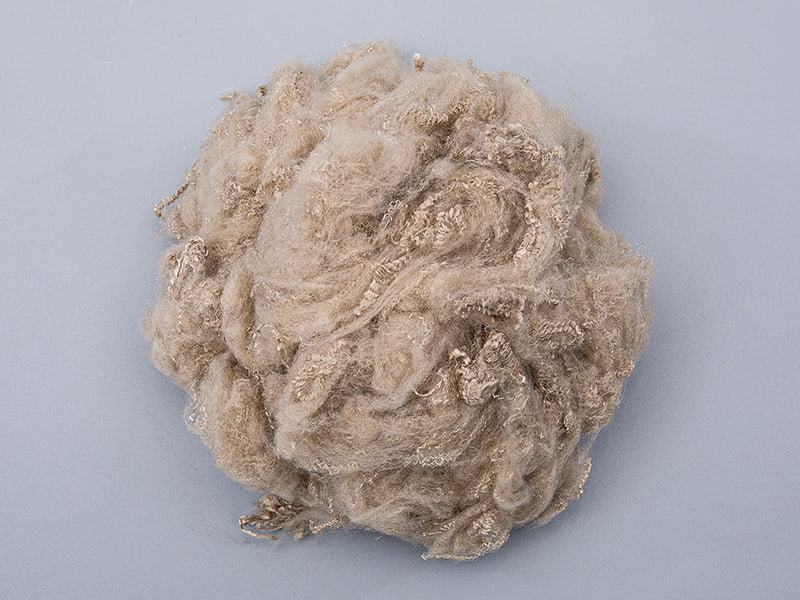
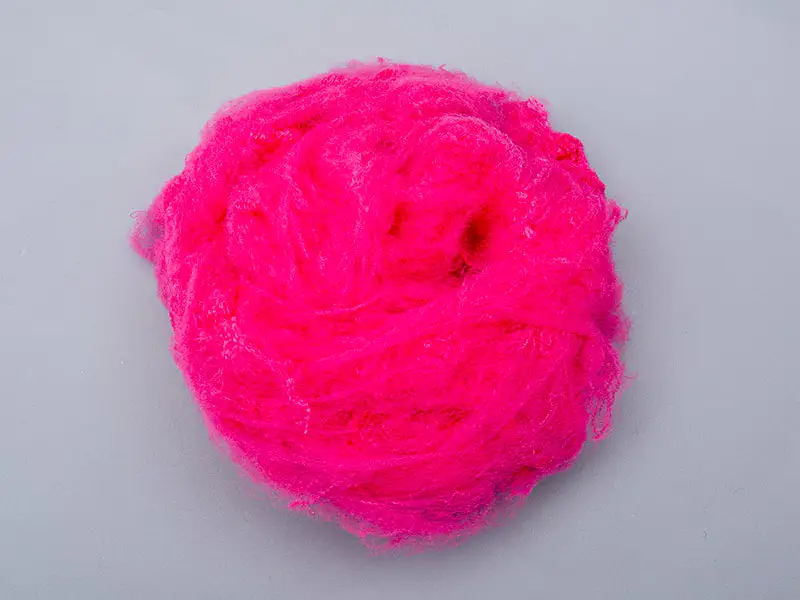
Mechanically recycled fiber from post-consumer waste comes in whatever color the original garments were. Sorting recycled textiles by color is labor-intensive and adds cost. The result:
High-volume buyers with flexible color requirements benefit significantly from natural recycled fiber. Brands requiring precise color matching should budget for either sorted source material or dye-to-match services.
Post-industrial recycled fiber (mill scraps, garment factory waste) is typically higher quality, more consistent, and cleaner than post-consumer waste. It commands a 15-25% price premium but reduces your downstream quality risk.
Post-consumer recycled fiber (used garments, worn-out textiles) is cheaper but more variable. The wider sourcing base keeps prices lower, but each batch requires more thorough cleaning and quality verification.
Some suppliers invest in advanced separation technology (near-infrared sorting, density separation) to remove contaminants and improve consistency. These suppliers typically charge premium pricing justified by reduced production problems downstream.
Recycled fiber suppliers often offer tiered pricing:
The discount reflects reduced supplier uncertainty and production planning benefit, not a reduction in their cost. Before committing to long-term contracts, run pilot production batches to confirm the recycled fiber performs as expected with your equipment and processes.
Pricing Strategy for Buyers:
Request samples and small trial quantities before signing volume agreements. Get pricing in writing for specific fiber specifications (length, tenacity, contamination limits). Ask suppliers about planned price adjustments and material availability forecasts. For critical applications, negotiate supply security clauses and quality guarantees into your contract.
Recycled fiber suppliers range from well-established mills with decades of experience to newer market entrants. The absence of standardized quality benchmarks means you need to establish clear verification procedures before committing to volume purchases.
Global Recycled Standard (GRS): Verifies recycled content percentage, chain of custody, and environmental/social compliance. Most stringent for apparel and consumer-facing brands.
Recycled Claim Standard (RCS): Focuses on recycled content verification with lighter environmental oversight. Sufficient for many B2B industrial applications.
ISO 14001 (Environmental Management): Demonstrates systematic approach to environmental impact. Common baseline for serious suppliers.
OEKO-TEX or equivalent: Chemical safety certification. Increasingly required for apparel and home textiles to limit restricted substances.
Regional standards: EU, US, and Asian markets have emerging recycled fiber standards. Confirm which apply to your regulatory landscape.
Beyond certifications, request lab reports on these parameters:
Reputable suppliers maintain testing partnerships with independent labs. If a supplier cannot provide recent test reports, view this as a red flag. Tests older than 6 months may not represent current batch quality.
Always request samples before committing to volume. Quality samples should include:
Run these samples through your actual production equipment—spinning frames, looms, nonwoven lines, or whatever your end use requires. Lab tests predict behavior but cannot account for your specific machinery interactions, twist geometry, or process speeds.
Document results carefully. Note any card breaks, sliver quality issues, equipment stress, or final fabric defects. Use this data to establish quality acceptance criteria for future shipments.
For strategic suppliers (those representing 10%+ of your recycled fiber volume), invest in annual facility audits. You do not need to visit in person, but a third-party audit covering material handling, sorting quality, testing procedures, and contamination control is valuable insurance.
Establish clear communication protocols: routine quality updates, prompt notification of specification changes or supply disruptions, and transparent problem-solving when issues arise. Recycled fiber supply chains are young and sometimes fragile. A collaborative relationship with your supplier is more valuable than constant price pressure.
Recycled fiber suppliers fall into several categories, each with distinct strengths and limitations:
When comparing suppliers, use this structured evaluation to move beyond price alone:
| Evaluation Criteria | Minimum Acceptable | Preferred |
|---|---|---|
| Certifications | ISO 14001 or equivalent | GRS or RCS certification |
| Testing capability | Third-party lab reports available | In-house lab with regular testing |
| Sample program | Samples available within 2 weeks | Express samples, trial pricing included |
| Supply volume capacity | Can deliver minimum order size | Excess capacity for growth |
| Price transparency | Written quotes with spec details | Detailed cost breakdown and volume tiers |
| Lead time | 4-8 weeks for standard orders | 2-4 weeks with safety stock option |
| Technical support | Responsive to basic questions | On-site support, blend optimization, troubleshooting |
Do not rely on a simple purchase order. Recycled fiber sourcing benefits from a detailed supply agreement covering these areas:
Include measurable performance targets and escalation procedures:
Establish a clear escalation path: first-line issue resolution with regular supplier contacts, second-line escalation to management, third-line involving third-party arbitration if needed. This prevents small problems from destroying the relationship and ensures issues are resolved promptly.
Recycled fiber is no longer a niche sustainability play—it is becoming central to mainstream textile supply chains. The technology and infrastructure are mature. The certified suppliers exist. The cost premium has compressed.
What remains is the sourcing skill: selecting the right grade for your specific application, working with capable suppliers to optimize performance, managing quality consistently, and communicating your recycled content story to customers and regulators.
The buyers who succeed in recycled fiber sourcing are not those hunting the lowest price. They are the ones who invest time in understanding specifications, run thorough production trials, build collaborative supplier relationships, and treat recycled fiber as a strategic material rather than a commodity cost-down play.
Start with a realistic assessment of your application needs. Do you need mechanically recycled or chemical recycled fiber? What performance trade-offs can you accept? Where will cost savings have the most impact? Then identify 2-3 qualified suppliers, request samples, and run trials on your actual equipment. The effort required upfront pays dividends in supply security, product consistency, and ultimately, in your ability to meet your customers' growing demands for sustainable sourcing.
Next Steps to Get Started:
Technically yes, but practically limited. Pure mechanically recycled fiber yarns tend to be weak, prone to breaking, and produce loose, fuzzy fabrics. Blending 30-50% recycled with virgin fiber works much better for apparel, maintaining fabric durability while capturing cost and sustainability benefits. For interior or utility fabrics where appearance matters less, 70-100% recycled can work with proper equipment adjustment.
Mechanically recycled fiber typically costs 40-60% less than virgin fiber. Chemical recycled fiber costs 30-50% more than virgin fiber. Certified recycled fiber adds 20-50% premium depending on the certification type and material source. Final pricing depends on fiber type, quality grade, volume commitments, and current market conditions. Request specific quotes from suppliers rather than relying on general benchmarks.
GRS (Global Recycled Standard) is more comprehensive, covering recycled content verification, chain of custody, environmental and social compliance, and chemical restrictions. RCS (Recycled Claim Standard) focuses specifically on verifying recycled content with lighter environmental oversight. GRS is more stringent and better recognized by consumer brands, while RCS may be sufficient for B2B industrial applications. Most suppliers pursuing premium markets pursue GRS certification.
Growing but not yet mature. Recycled fiber production depends on collection infrastructure for post-consumer waste, which varies significantly by region. Some countries have strong textile recycling systems, while others are still developing collection networks. Supply can be seasonal. Prices fluctuate with virgin fiber markets and recycled content demand. For critical applications, establish supply agreements with lead time provisions and consider dual-sourcing with backup suppliers.
Not necessarily. Properly sourced and processed recycled fiber performs admirably in many applications. Nonwovens are essentially unaffected by recycled content. Blended yarns with 30-50% recycled content show minimal quality degradation if fiber is well-matched to your process. Premium applications requiring highest quality may require chemical recycled fiber or virgin material. The key is matching the recycled fiber grade to your application performance requirements, not assuming all recycled fiber is inferior.
Your contract should specify resolution procedures: notification within defined timeframe, third-party testing to confirm discrepancy, and remedy options including replacement, credit toward future orders, or return authorization. Document the issue with photos and test results. Communicate immediately with your supplier before the material enters production. Good suppliers will work quickly to resolve issues and prevent recurrence. This is where your detailed quality acceptance criteria and supplier communication protocols pay dividends.
Yes, but carefully. Blending fibers from different suppliers introduces variability in length distribution, tenacity, and potential contaminants. Before committing to a blend, request detailed specifications from each source and run trials to confirm compatibility. Longer-term, working with one primary supplier allows you to develop deeper understanding and optimize blend ratios. If you require multiple suppliers for supply security, establish clear specifications and testing procedures so materials remain interchangeable.
Be specific and verifiable. Rather than general claims like "eco-friendly," state exact percentages: "50% recycled content" or "75% post-consumer recycled fiber blend." Reference relevant certifications (GRS, RCS). Provide transparency on what recycled means for your product (strength, performance expectations). Avoid overstating environmental benefits—recycled fiber is material efficiency, not a universal sustainability solution. Many customers appreciate honest communication more than aspirational marketing.
Significant. Post-consumer recycled fiber comes in whatever colors garments were originally dyed. Sorting by color is labor-intensive and adds cost. Natural/undyed recycled fiber (grays, taupes, mixed tones) is cheapest. Pre-sorted single colors cost 20-30% more. If you need specific brand colors, budget for either sorting premium or re-dyeing costs. Consider whether product design can accommodate recycled fiber's natural color palette—this often unlocks cost and sustainability benefits simultaneously.
Some countries have import restrictions or certification requirements for recycled textile materials. Basel Convention regulations apply to international waste material movement. Verify your region's import/export requirements before committing to international suppliers. Some suppliers specialize in specific geographic markets due to regulatory familiarity. This is an important detail for global sourcing strategies—do not assume material certified in one region meets all others' requirements without verification.
Emon Technology is willing to sincerely join hands with you, cooperate for win-win results, and create brilliance together!
Tel: +86-512-63679088
Email: [email protected]
[email protected]
[email protected]
[email protected]
[email protected]
Add:South of 318 National Highway, Miaotou Village, Meiyan, Wujiang, Jiangsu
Copyright © Suzhou Emon New Material Technology Co., Ltd. All rights reserved.



 English
 中文简体
中文简体 Español