2026.10.09
 Industry Information
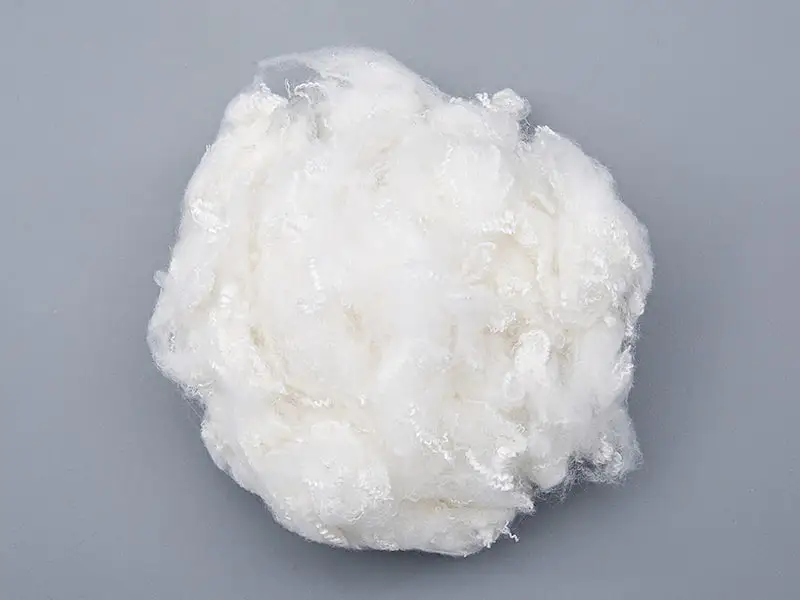
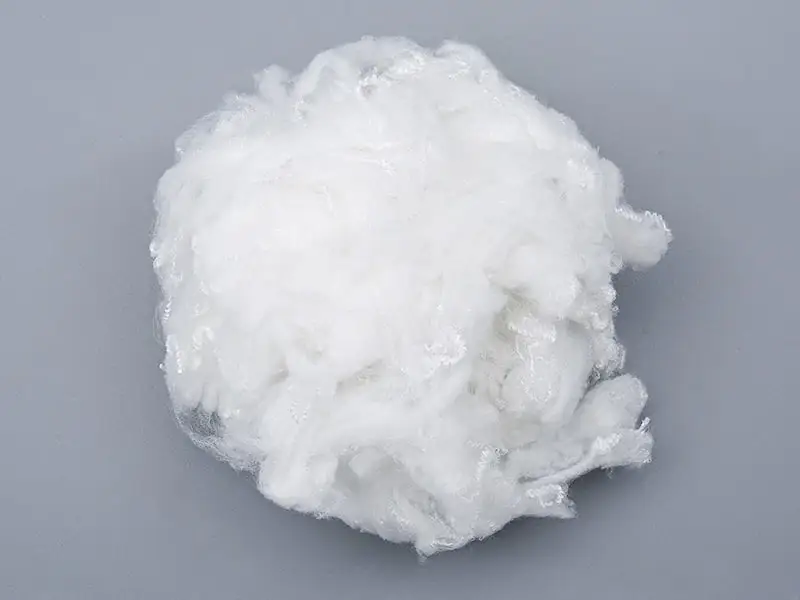
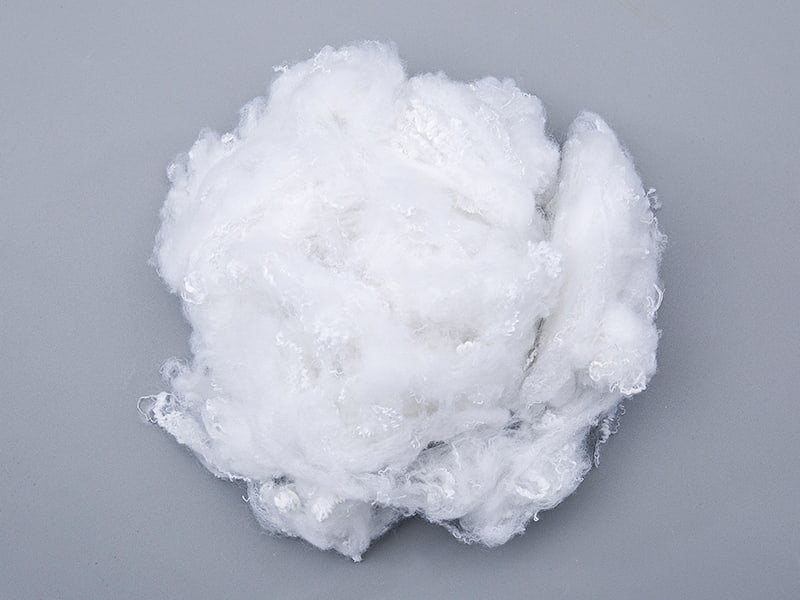
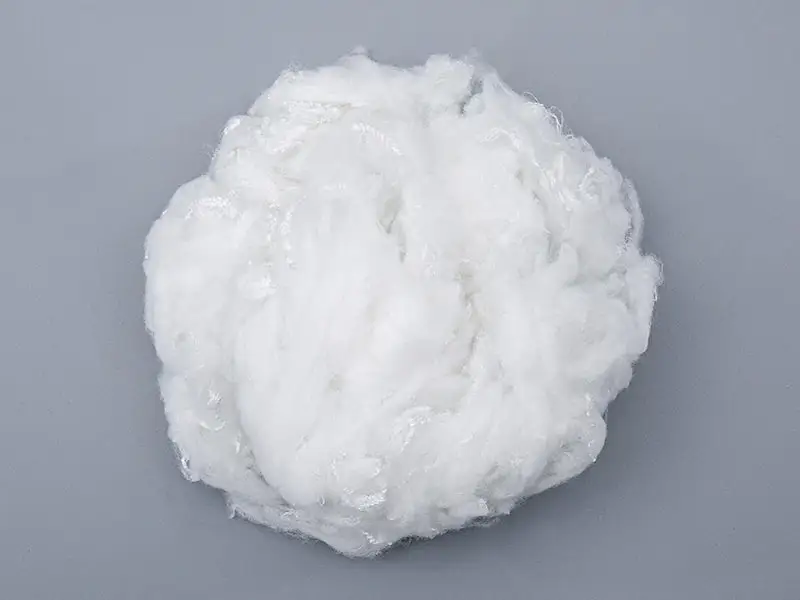
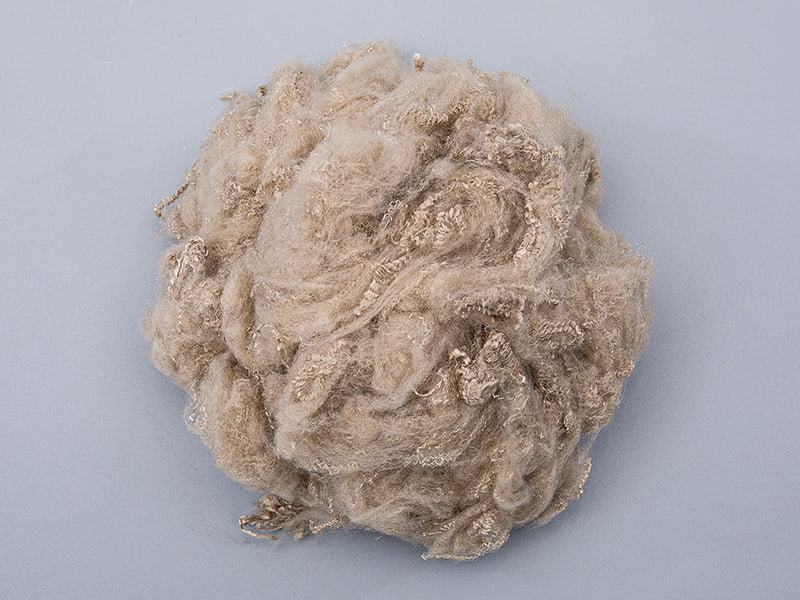
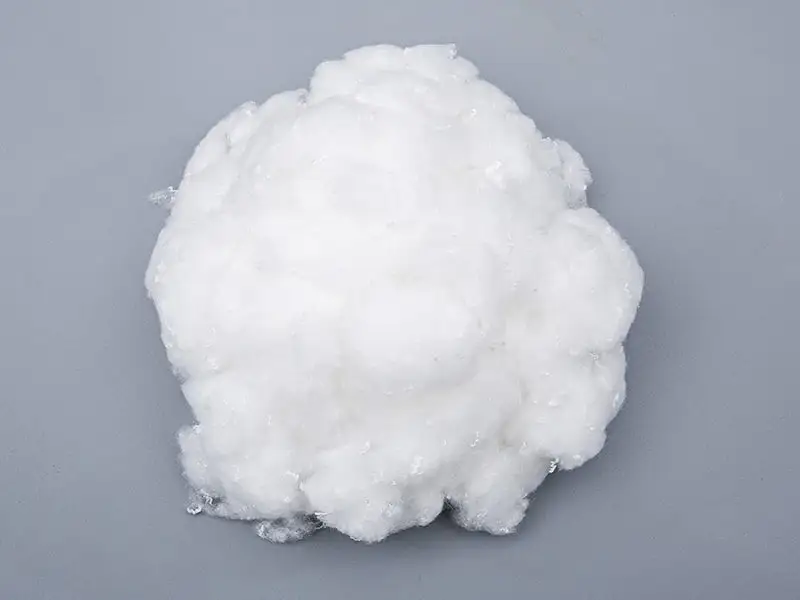
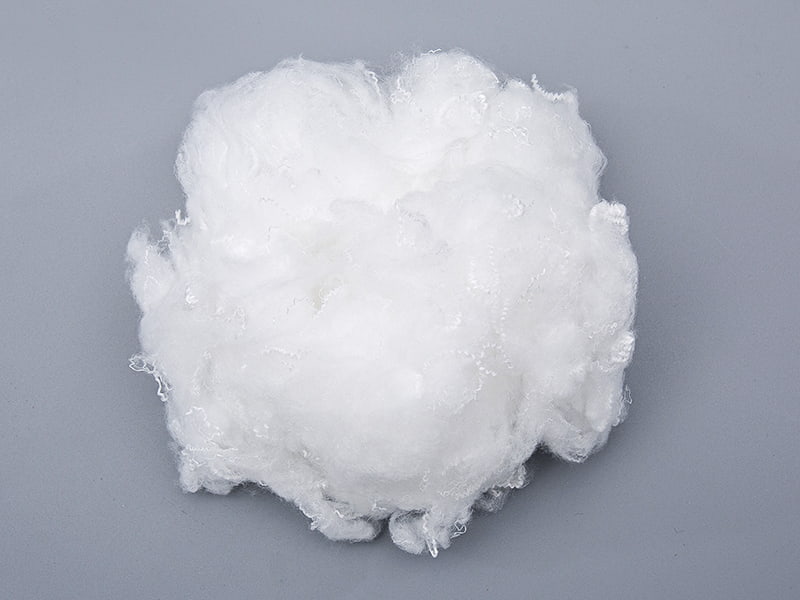
Spinning mills, nonwoven converters and filling manufacturers are asking the same question: can part of their virgin polyester demand be covered by a material that costs less to source, carries a credible sustainability story and still runs smoothly on existing equipment? Increasingly, the answer points to recycle polyester fiber, a staple fiber produced from post-consumer bottles and polyester industrial waste. A few years ago it was treated as a niche option. Today buyers compare it directly with virgin grades on price, consistency and documentation.
The gap between a good recycled fiber and a poor one is wide, and it is rarely visible on a product sheet alone. Feedstock sorting, melt filtration, drawing conditions and finish oil all shape how the fiber behaves on a carding machine or inside a finished pillow. This guide walks through the material from raw source to purchase order, so that technical teams and procurement staff can ask sharper questions before committing to volume.
Recycled polyester starts with waste that already contains a polymer chain suited to melt processing. Three streams dominate the market, and each brings different levels of cleanliness, color uniformity and traceability. In trade discussions the finished material is often called rPET fiber, but the sourcing decisions behind it matter far more than the label.
Clear and colored beverage bottles collected through household recycling systems form the largest source. They are sorted by color, stripped of labels and caps, ground into flakes and washed. Quality depends heavily on collection and sorting discipline, so reliable suppliers document incoming material specifications and reject lots that fall outside their limits.
Offcuts, startup yarn and rejected batches from fiber and textile plants are cleaner and more uniform than bottle flakes. Because the polymer history is known, this stream usually yields the most consistent fiber. The drawback is limited volume, which makes it more expensive and less available for large orders.
Spin-line waste, film trimmings and other industrial residues make up a third stream. Contamination levels vary considerably between sources, so these materials need careful pre-treatment, color screening and testing before they can be converted into fiber that meets a stable specification.
Most recycle polyester fiber on the market is produced by mechanical recycling followed by melt spinning. The route is simpler and generally less energy-intensive than chemical depolymerization, which is one reason it dominates current supply. Each stage has a direct effect on the properties that buyers measure later.
Process control matters at every step. Flakes that retain moisture can degrade the polymer during extrusion, reducing strength. Poor filtration leaves specks that show up as defects in dyed fabric. Careful drawing settings determine whether the fiber carries enough elongation to survive carding without excessive breakage.
The most common objection is performance. Modern mechanical recycling, combined with disciplined sorting and melt filtration, produces fiber that behaves very close to virgin material in most end uses. The differences that remain are usually manageable through process adjustments rather than through compromises on the final product.
| Property | Recycle polyester fiber | Virgin polyester fiber |
|---|---|---|
| Tensile strength | Comparable in standard grades | Reference grade |
| Spinnability | Good with clean, uniform feed | Excellent across settings |
| Dyeing behavior | Similar, with shade variation tied to feedstock | Highly predictable |
| Moisture regain | Very low, close to virgin | Very low |
| Surface uniformity | Depends on sorting quality | Very uniform |
| Cost stability | Linked to waste collection volumes | Linked to feedstock markets |
| Environmental profile | Lower energy demand in many studies | Higher upstream impact |
Life-cycle studies commonly report lower energy demand for mechanically recycled polyester than for virgin production. The actual savings depend on the energy mix, transport distances and process efficiency at each plant. Buyers should request supplier-specific data rather than relying on generic figures that may not reflect their supply chain.
Application fit is the real test of any fiber. The following sections describe where recycled staple fiber is most commonly used and what buyers in each sector usually look for.
Ring spinning, open-end spinning and air-jet spinning all accept recycle polyester fiber when cut length, crimp and fineness match machine settings. Blends with cotton or viscose are common, with ratios chosen to balance cost against hand feel and yarn strength. A trial on one production line before full adoption is the most reliable way to confirm compatibility.
Carded and air-laid nonwovens use recycled staple fiber for filtration media, insulation batts, geotextiles and wipes. Here, uniform length and low dust content matter more than luster. Fiber that is too coarse reduces web uniformity, while excessive fines can clog bonding equipment.
Pillows, quilts and upholstery depend on resilience, loft and washability. Hollow cross-sections give better loft per gram, and crimp stability determines whether the filling keeps its shape after repeated compression and washing. Buyers in this sector often ask for specific bounce tests during sampling.
Acoustic padding, carpet backing and headliner substrates use recycled fiber where sound absorption and dimensional stability are priorities. Suppliers in this segment typically need stricter batch documentation and emissions-related testing, so early alignment on requirements saves time later.
A certificate is only as useful as its scope. It may apply to the fiber itself, to a single production site, or only to certain process steps. Buyers should confirm three things: which facilities are covered, which products are listed, and when the certificate expires. A certificate that is valid for the mill but not for the specific product grade offers little protection.
This standard verifies recycled content and tracks material through the supply chain, from incoming feedstock to finished fiber. It also covers social and environmental management at the production site. For recycled claims to hold up, buyers should expect transaction certificates that link each shipment back to certified input material.
This label tests finished textile products for a defined list of harmful substances. It is product-oriented, so it indicates whether a specific fiber grade or article has passed testing at a given time. Buyers should check which product class and test date the certificate refers to, since results do not automatically transfer to other grades.
This standard certifies a quality management system rather than a product. It shows that a manufacturer documents its processes, controls nonconforming output and reviews performance. It is a useful indicator of process discipline, but it does not replace product-level testing.
A precise specification prevents most sourcing disputes. The table below summarizes the parameters that appear on almost every quotation and the practical effect of each choice on your production line and finished product.
| Parameter | Typical range | Practical effect |
|---|---|---|
| Denier | 1.4D to 15D | Finer fiber suits spinning, coarser fiber suits filling |
| Cut length | 32 mm to 64 mm | Shorter lengths suit short-staple systems, longer lengths suit woolen-type systems |
| Luster | Semi-dull or bright | Semi-dull hides minor surface variation in dyed goods |
| Cross-section | Solid, hollow or multi-hollow | Hollow structures raise loft and insulation per unit weight |
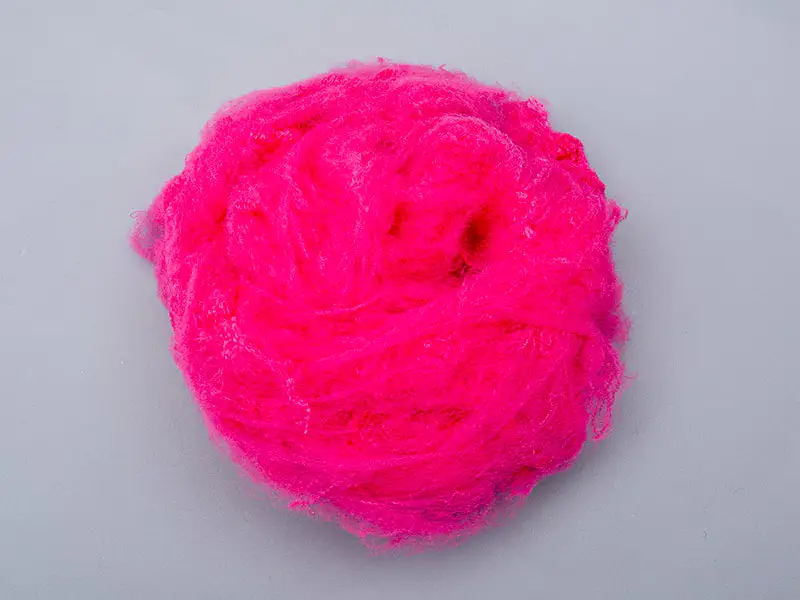
| Color | Natural off-white or dyed to a shade card | Dyed fiber removes a dyeing step from your process |
Denier and cut length should be set together, because a fiber that is fine but very short may produce a different web or yarn structure than one with the same denier and a longer cut. When you are unsure, provide the target product, the machine type and the performance requirement, and ask the supplier to recommend a starting grade.
Price is shaped by feedstock availability, specification complexity, color requirements and certification scope. Recycled fiber prices move with waste collection volumes and virgin market cycles, so buyers who plan over a full year usually obtain more stable terms than those who buy reactively.
Production scrap costs more but arrives cleaner, while bottle flakes offer volume at lower cost with more variability.
Custom denier, cut length or dyed colors add setup steps and often raise the minimum order.
Broader certification scope and batch documentation carry administrative cost that is reflected in the quote.
Many suppliers set minimums for standard grades in the range of one to several tonnes per color, while custom colors and specifications usually require larger runs to justify dye trials and changeovers. Ask whether the minimum applies per color, per grade or per shipment, since this changes the real cost of a trial order.
Samples for standard specifications often take about one to two weeks. Custom color matching needs additional dye trials, and certificate-dependent lots may need documentation review before dispatch. Building these periods into your development schedule prevents delays at the stage where production is already committed.
Most quality problems with recycled fiber are predictable and can be caught early. A structured incoming inspection, combined with a short production trial, usually reveals whether a lot will behave consistently across the full order.
Treat the first production lot as a validation step. Keep retained samples from each shipment so that any future complaint can be traced back to a specific batch, and agree on acceptance criteria in writing before the order is placed.
In most standard applications it performs very close to virgin fiber, especially when feedstock is well sorted and process control is strict. Differences in dyeing uniformity and surface consistency can occur, so a sample trial on your own equipment is the most reliable check.
Request a recycled content standard certificate with transaction records, a product-oriented test certificate for harmful substances where your end market requires it, and a quality management certificate. Verify each one in the issuer database and confirm that the covered sites and product grades match your order.
Start with your machine type and finished product. Finer denier generally suits spinning and fine nonwovens, while coarser denier suits filling and structural applications. Ask the supplier for a recommendation based on your performance targets, then confirm it with a trial.
Standard grades often arrive within one to two weeks. Custom colors, unusual cut lengths or certificate reviews can add time, so include these possibilities in your development schedule and ask for an estimated date when you submit your request.
Prices depend on the feedstock stream, specification and market conditions at the time of purchase. Recycled fiber can be competitive, but comparisons should be made on a delivered, specification-matched basis rather than on headline prices alone.
Include denier, cut length, luster, cross-section, color, the required certifications, expected annual volume, delivery location and your machine type. Clear information lets the supplier quote accurately and reduces the number of revision rounds before an order is confirmed.
Emon Technology is willing to sincerely join hands with you, cooperate for win-win results, and create brilliance together!
Tel: +86-512-63679088
Email: [email protected]
[email protected]
[email protected]
[email protected]
[email protected]
Add:South of 318 National Highway, Miaotou Village, Meiyan, Wujiang, Jiangsu
Copyright © Suzhou Emon New Material Technology Co., Ltd. All rights reserved.



 English
 中文简体
中文简体 Español