2026.10.22
 Industry Information
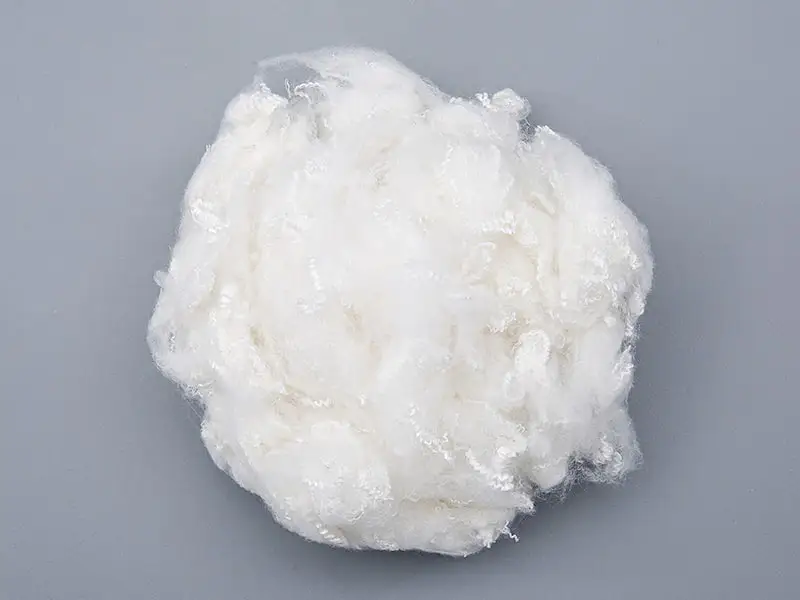
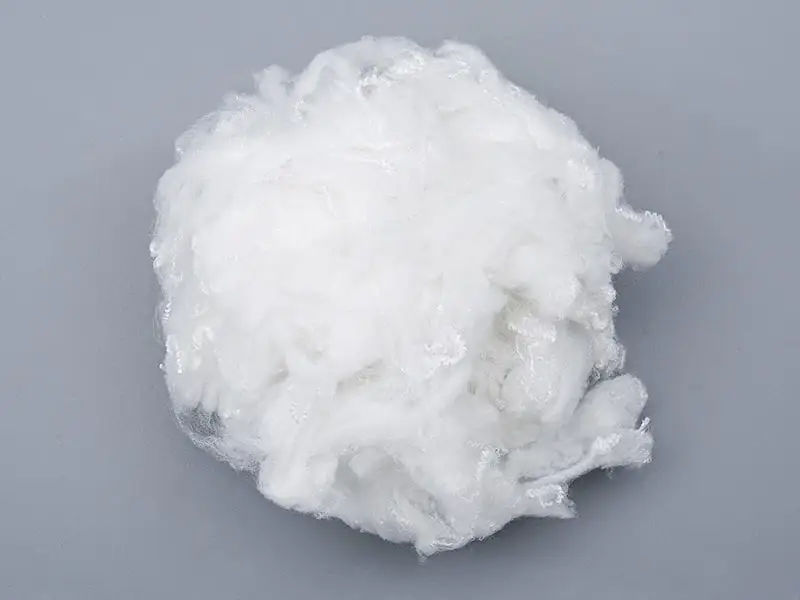
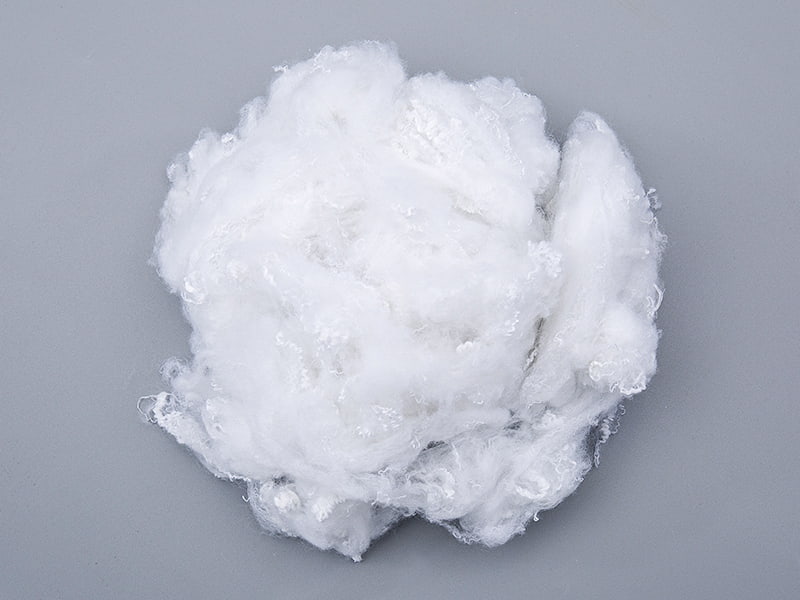
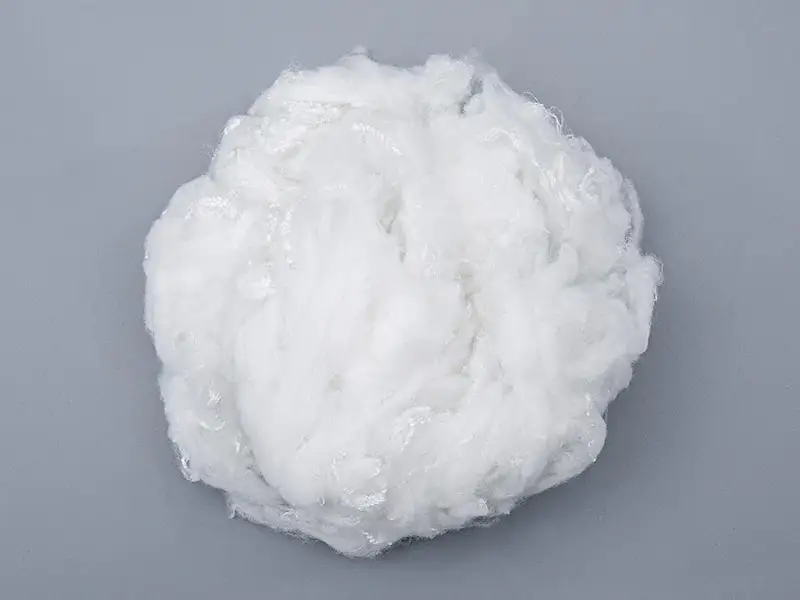
Every square meter of a modern vehicle interior is a negotiation between competing demands. Designers want soft, premium surfaces. Engineers want parts that are light enough to protect driving range, quiet enough to meet cabin noise targets, safe enough to resist ignition, and stable enough to survive years of heat, humidity and vibration. Behind most of these surfaces, in the felts, backings and insulating layers that rarely get noticed, sits a fiber that has quietly become one of the most versatile materials in the car: polyester staple fiber.
This article examines how that fiber contributes to performance in automotive textiles, what the measurable gains look like in practice, and how engineers and buyers can translate those properties into a sound material specification.
Most automotive textile components that are not woven or knitted start life as a nonwoven web. Fibers are opened, carded or air-laid into a mat, then consolidated by needle punching, thermal bonding, chemical bonding or a combination. The resulting felt becomes the carrier for surface fabrics, the core of acoustic layers, or the cushioning backing of seats and trim. The choice of fiber sets the ceiling for almost every downstream property.
Engineers typically weigh four fiber families against one another. Polypropylene is inexpensive and very light but softens at relatively low temperatures and has limited heat stability. Polyamide offers excellent abrasion resistance but carries a higher price and greater moisture sensitivity. Regenerated cellulose brings a natural feel but performs poorly in wet and high-heat conditions. Polyester sits in a practical middle ground: its melting point is high, its dimensional stability is good, its moisture uptake is low, and its price is predictable.
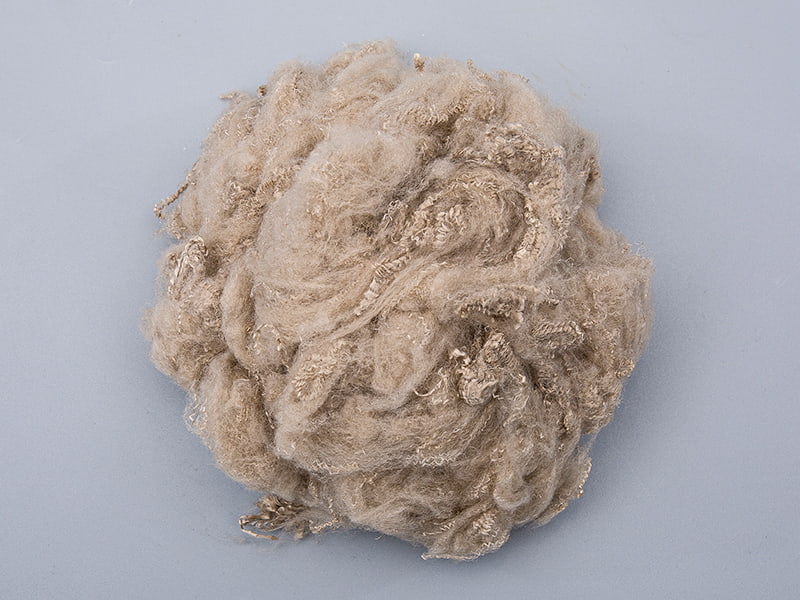
High melting point, low moisture uptake, stable dimensions, broad processing window.
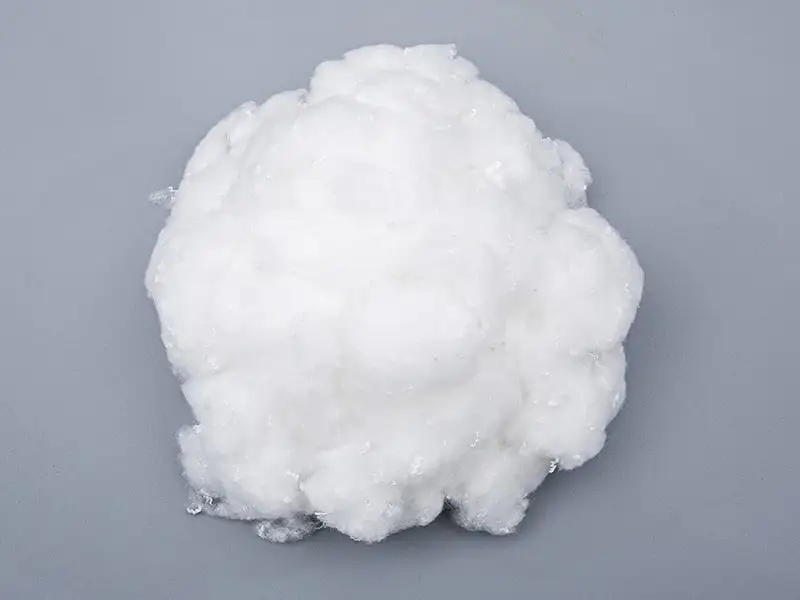
Lowest density and cost, but limited heat resistance for molded interior parts.
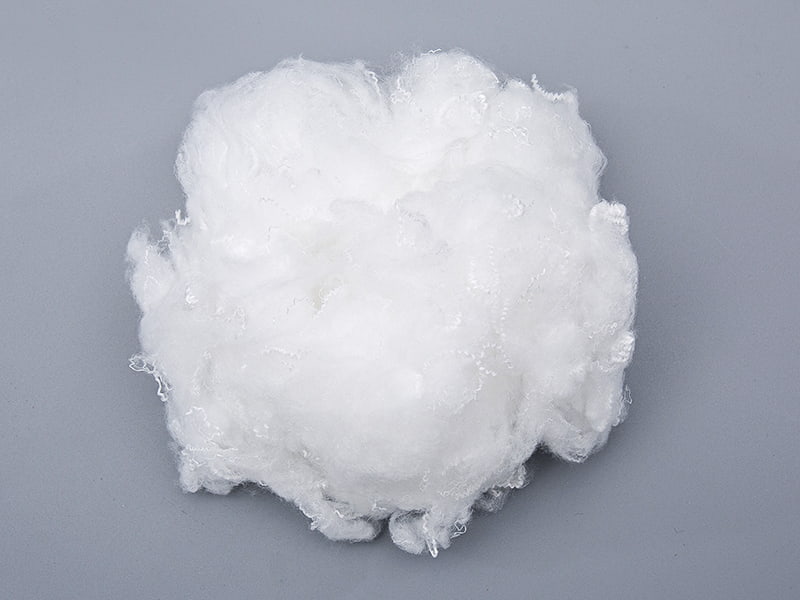
Strong abrasion resistance, yet higher cost and greater sensitivity to humidity.
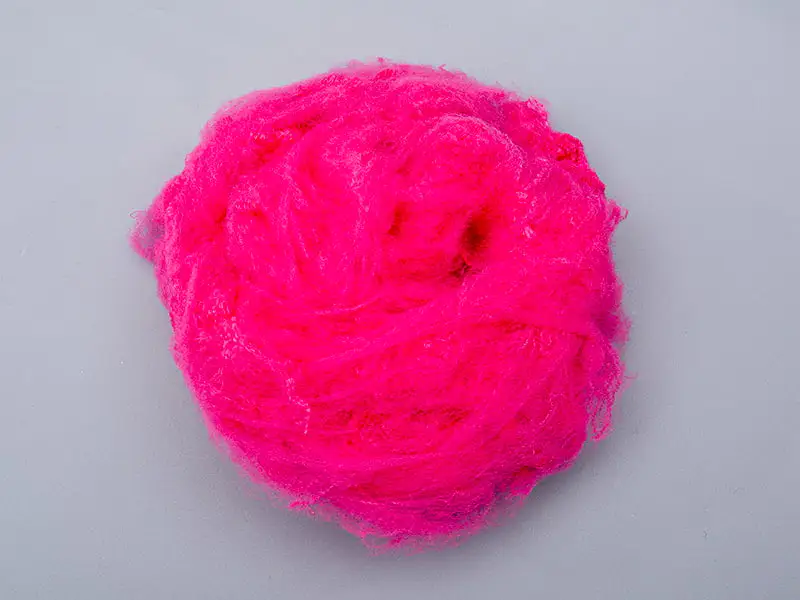
Natural hand feel, but weaker performance under heat and wet conditions.
Polyester staple fiber runs well on conventional carding and needle-punching lines, and its crimp level can be tuned to produce a loft that suits either acoustic felts or dense structural mats. When low-melt components are blended in, the same fiber can also be thermally bonded, which makes it compatible with both mechanical and thermal consolidation routes used across automotive suppliers.
The performance benefits of polyester staple fiber are not abstract. Each one maps to a measurable outcome during validation, from flame spread tests to cabin noise measurements and production yield reports.
Polyester has a melting point typically above 240 degrees Celsius, which allows felt layers to hold their structure during high-temperature molding and under the heat loads found near engine bays and exhaust-side trim. When paired with a phosphorus-based flame-retardant treatment, the fiber web can meet common horizontal and vertical burn requirements while keeping hand feel acceptable. The key is to match the fiber's thermal window to the molding cycle so that the flame-retardant finish is not compromised.
A polyester felt's acoustic performance depends on its airflow resistance, thickness and internal fiber geometry. Mechanically crimped staple fibers create an open, tortuous path that dissipates sound energy, particularly in the low and mid frequencies where road and powertrain noise concentrate. In floor carpets and luggage compartment covers, a polyester felt layer is often laminated with a heavier sound-insulating barrier, creating a decoupled system that absorbs and blocks at the same time.
Blending a low-melting polyester component at roughly 15 to 25 percent into a conventional polyester stock gives the mat a bonding matrix. After needle punching, a short thermal press activates the low-melt fibers and locks the structure in place. The result is a lighter mat that still holds its shape and tensile integrity. For electric vehicles, mass reduction in interior components supports range, and the benefit compounds across the many trim parts in a single car.
In seat foam backing, sheath-core polyester fibers prevent polyurethane from penetrating through the nonwoven during foaming, which directly improves first-pass yield. During hot molding, uniform thermal shrinkage avoids the surface waviness that appears as orange-peel or elephant-skin defects on finished trim. Consistent fiber diameter and crimp are the variables that most influence this uniformity.
Specifying a polyester staple fiber for automotive use is less about choosing a single grade and more about matching a set of parameters to a process and a part. The checklist below covers the attributes that buyers and engineers should confirm before moving to sample trials.
| Application | Typical Fiber Configuration | Melting Point Reference | Primary Benefit |
|---|---|---|---|
| Door trim backing | Low-melt and regular PET blend | Low-melt 120 to 170 C, regular above 240 C | Moldability and rigidity |
| Seat foam backing | Sheath-core PET or co-polyester | Core above 240 C | Foam leakage control and shape retention |
| Floor carpet backing | Regular PET with binder fiber | Binder around 110 C | Sound absorption and softness |
| Luggage cover felt | Crimped regular PET, medium denier | Above 240 C | Acoustic performance at low weight |
Different interior zones impose different thermal, acoustic and mechanical demands, so a single fiber grade rarely serves the whole vehicle. Mapping each zone to its own configuration usually produces better cost control than over-specifying one material everywhere.
Understanding where fiber properties translate into part performance helps engineers diagnose problems faster. The sequence below shows the typical route from raw staple to molded component.
Staple fiber is cut to defined lengths and carded into a web, which makes it the natural choice for nonwoven felts with loft and acoustic function. Filament is continuous and is typically woven or knitted into surface fabrics where a smooth, uniform yarn is needed. Both come from the same polymer family, but their processing routes and end uses differ considerably.
Recycled polyester can perform well in many interior felts when its feedstock is consistent and its melt quality is controlled. Suppliers should provide traceability data, mechanical test results and evidence that flame-retardant performance is unchanged. Trials on the target molding line remain the most reliable way to confirm suitability.
Medium deniers are widely used for acoustic and structural felts because they balance loft with fiber count. Finer fibers increase fiber density and can improve sound absorption at certain frequencies, while coarser fibers contribute stiffness and bulk. The right choice depends on basis weight, target thickness and the bonding method.
Polypropylene is lighter and less expensive, which is attractive for low-cost parts. Polyester offers higher heat resistance, better dimensional stability and a wider processing window, which matters for molded and heat-exposed components. For acoustic felts that must hold their thickness and shape over the vehicle's service life, polyester often provides a more consistent performance profile.
Polyester staple fiber is not a filler. It is a functional material that influences flame behavior, acoustic response, weight, moldability and surface quality in automotive textiles. Engineers who define the fiber carefully, match it to each interior zone and validate it on the actual process line tend to see fewer defects and more predictable performance. Teams that are preparing a new program can use the specification checklist above as a starting point for supplier discussions and sample requests.
Emon Technology is willing to sincerely join hands with you, cooperate for win-win results, and create brilliance together!
Tel: +86-512-63679088
Email: [email protected]
[email protected]
[email protected]
[email protected]
[email protected]
Add:South of 318 National Highway, Miaotou Village, Meiyan, Wujiang, Jiangsu
Copyright © Suzhou Emon New Material Technology Co., Ltd. All rights reserved.



 English
 中文简体
 Español